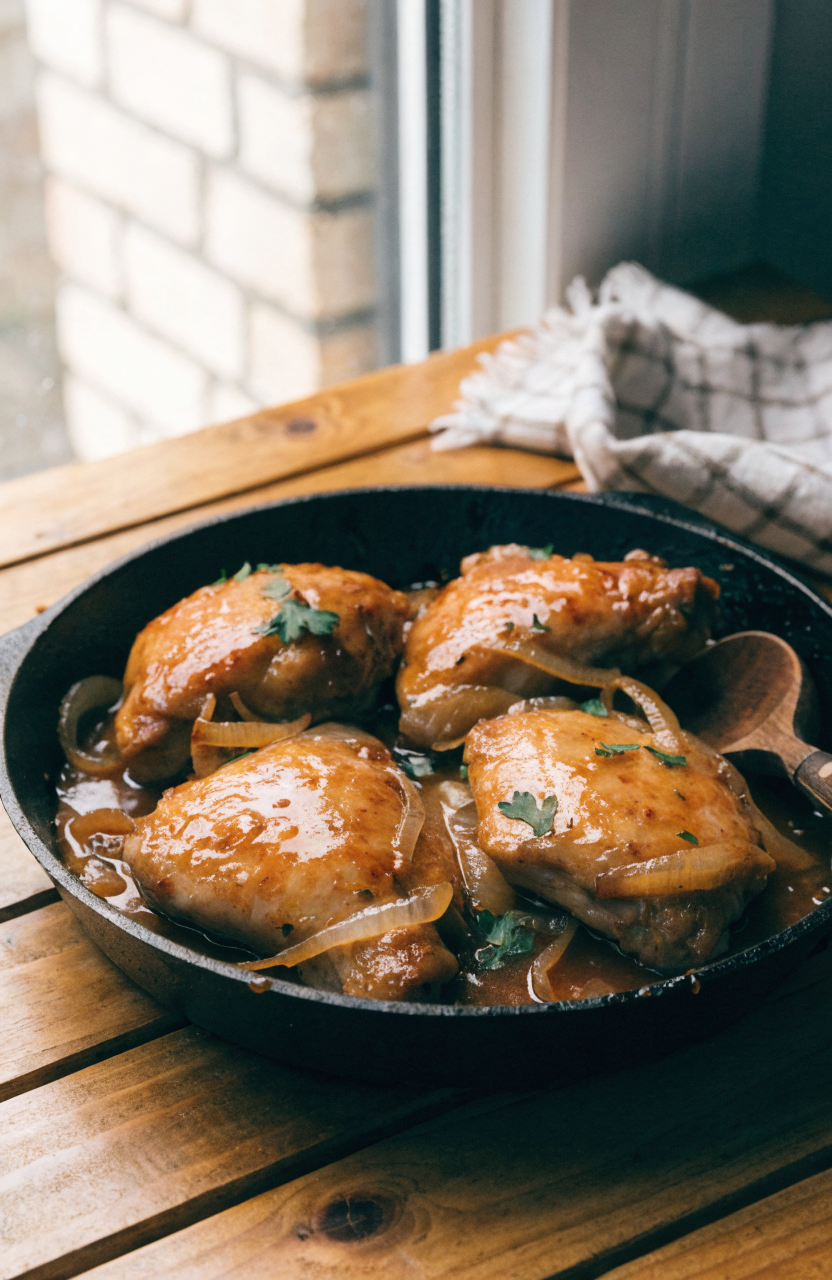
I first tested this cider braised chicken because I wanted a one-pot fall dinner where the chicken stayed juicy and the onions developed a rich, jammy texture without turning bitter; the cider braise delivers exactly that. Cider braised chicken centers on controlled heat, a shallow braise, and timing that protects texture.
In my kitchen the finished dish smelled faintly sweet from the cider, the onions were soft with glossy edges, and the chicken skin was tender but not soggy — read on for the exact steps and cues that made it work.
Why this cider braised chicken works
The part that matters is matching two textures: tender, fully cooked chicken with a slightly reduced braising liquid, and deeply caramelized onions that taste sweet rather than burnt. To get there I use chicken thighs (skin-on, bone-in) because they tolerate longer braising while staying moist, and I brown them first to create fond — those browned bits are the flavor base for the cider reduction.
I tested two ratios of cider to stock and settled on 1 cup apple cider to 1 cup low-sodium chicken stock for a balanced sweetness that reduces into a glossy pan sauce without becoming syrupy. I also reduced the heat when I add the cider so the onions soften and finish caramelizing in the braise rather than scorching during the initial sear.
Finally, I include exact temperature and visual cues: a skillet temperature for browning, a gentle simmer for braising, and an internal temperature target of 165°F for the thigh meat. That combination fixes the most common problems readers report: dry chicken from overcooking and bitter onions from caramelizing too hot.
Key takeaways
- Brown chicken well and reserve the fond for flavor.
- Caramelize onions slowly, then finish them in the cider braise for jammy texture.
- Use an internal temperature of 165°F for safe, juicy thighs and remove from heat shortly before the sauce is fully reduced.
Ingredients you’ll need and what to substitute
The star ingredients are bone-in, skin-on chicken thighs, sweet yellow onions, apple cider (not hard cider), low-sodium chicken stock, and a touch of acidity from apple cider vinegar to brighten the sauce. The onions should be thinly sliced so they collapse and caramelize evenly; if they’re thick the cooking time increases and you risk uneven texture.
Substitutions and notes: swap boneless thighs if you prefer but reduce braising time by 10–15 minutes and watch the internal temperature closely; use chicken breasts only if you finish them in the sauce for much shorter time to avoid dryness. Replace apple cider with pear juice in a pinch—expect a slightly milder fruitiness. If you want less sweetness, use 1 1/4 cups stock to 3/4 cup cider and increase a splash of vinegar to balance.
Use unsalted butter or neutral oil for browning; if you use salted butter, skip or reduce the added table salt in the recipe. Measure cider and stock precisely—the liquid level should come about halfway up the thighs when they’re in a single layer.
Equipment
- 12-inch heavy skillet or Dutch oven (3 to 5 quart) — essential for good fond and even heat.
- Instant-read thermometer for checking chicken doneness.
- Wooden spoon or heatproof spatula for scraping the pan fond.
- Cutting board and sharp chef’s knife for slicing onions.
How to make cider braised chicken
Prep and brown
Pat 6 bone-in, skin-on chicken thighs dry and season with salt and pepper. Heat the skillet over medium-high until a drop of water sizzles and add 1 tablespoon neutral oil. Brown the thighs skin-side down without moving them for 5–6 minutes until the skin is deep golden and releases easily; flip and brown the other side 3 minutes. Transfer the chicken to a plate — the fond left behind is crucial for the sauce.
Caramelize onions
Lower the heat to medium and add 2 tablespoons butter and 2 large thinly sliced yellow onions to the pan. Stir to coat and spread the onions in an even layer. Cook slowly, stirring every 3–4 minutes, for 15–20 minutes until they are deeply soft and golden at the edges. If the pan looks dry or the onions are sticking aggressively, add 1–2 tablespoons of water to deglaze and prevent burning; the goal is jammy, not charred.
Deglaze and braise
When the onions are soft, pour in 1 cup apple cider and use the wooden spoon to scrape up the fond. Add 1 cup low-sodium chicken stock and 1 tablespoon apple cider vinegar. Return the chicken thighs to the pan, skin-side up, so they sit partially submerged. Bring the liquid to a gentle simmer (not a rolling boil), then reduce heat to low, cover partially with a lid or a piece of foil, and simmer gently for 22–28 minutes. Start checking internal temperature at 20 minutes with an instant-read thermometer inserted near the bone; the safe target is 165°F.
Finish the sauce
Once the thighs reach 165°F, transfer them to a plate and tent loosely with foil to rest for 5–8 minutes; meat will carryover cook a few degrees. Increase the heat to medium-high and reduce the braising liquid uncovered for 4–6 minutes until it thickens slightly and coats the back of a spoon. Taste and season with salt and pepper, then spoon the onions and sauce over the rested chicken to serve.
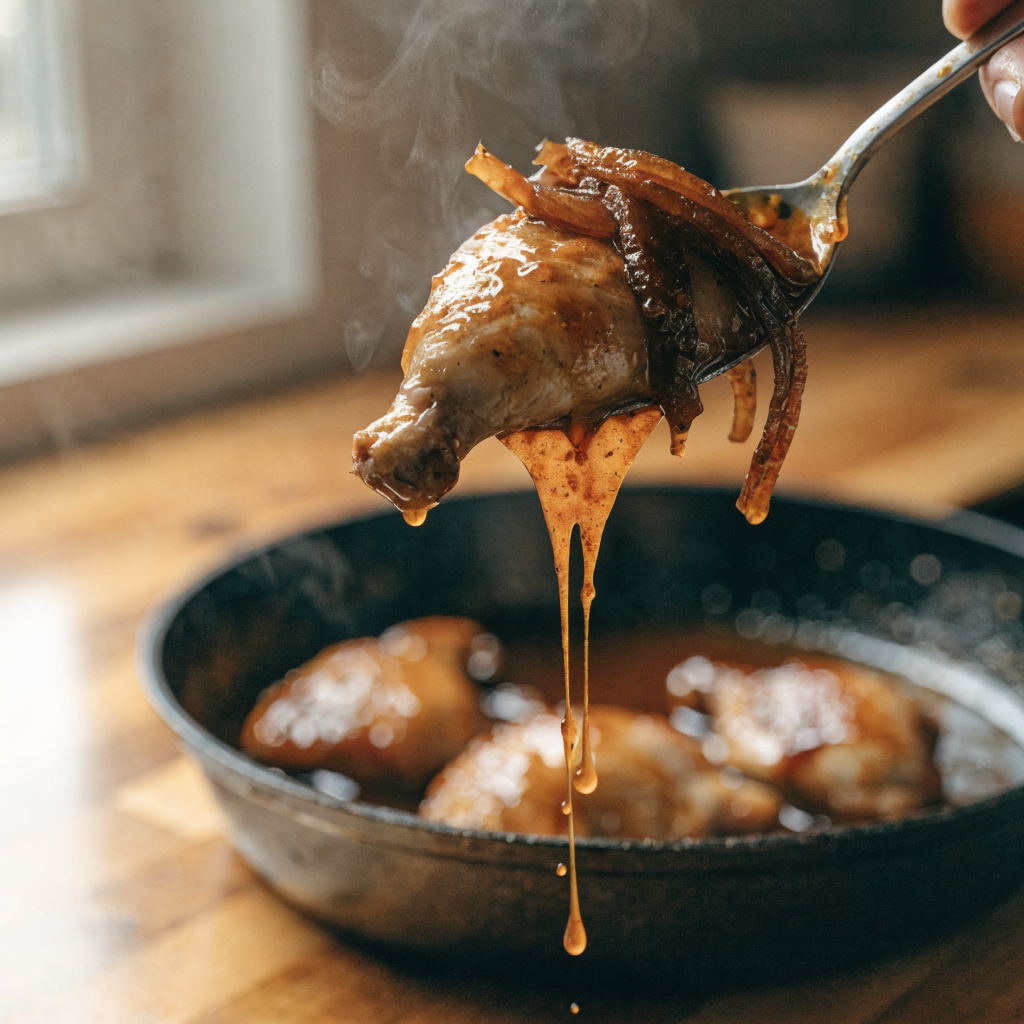
Important texture cues: the onions should be glossy and cling to the spoon, the sauce should coat the back of a spoon without running off like water, and the chicken skin will be tender rather than crisp after braising but still intact.
Things I learned the hard way
- Don’t caramelize onions on high heat — slow and steady wins here.
- Brown chicken thoroughly — skimping on browning leaves the sauce lacking depth; the fond transforms the braise.
- Use a thermometer — visual cues for thighs can be misleading; checking 165°F prevents dryness.
- Control liquid volume — too much cider makes the sauce watery; keep the liquid level just high enough to come halfway up the thighs.
- Finish uncovered — serving the braise without reducing tastes dilute; quick reduction concentrates flavor and gives a pleasant coating texture.
- First-time mistake: I added cider at high heat and the cooked-cider edge made the sauce sharp; cooling the pan briefly before adding cider keeps the flavor bright without harshness.
Variations to try
- Mustard-Maple Finish: Stir 1 tablespoon whole-grain mustard and 1 teaspoon maple syrup into the reduced sauce at the end for a tangy-sweet glaze; no time change needed.
- Mushroom Addition: Add 8 ounces sliced cremini mushrooms with the onions and sauté until they release liquid; braising time remains the same but expect a deeper umami tone.
- Herb-Studded Braise: Add 2 sprigs thyme and 1 bay leaf to the braising liquid; remove before reducing. This will subtly change aroma without altering timing.
- Chicken Breast Option: Use bone-in breasts and reduce covered braising time to 12–15 minutes after simmer begins; check internal temp carefully to avoid dryness.
Storage, freezing, and reheating
Refrigerate leftover chicken and sauce in an airtight container for up to 3 days. For freezing, place cooled chicken and sauce in freezer-safe containers with as little headspace as possible; freeze up to 3 months. Thaw overnight in the refrigerator.
To reheat, warm gently on the stovetop over low heat until the sauce simmers and the chicken registers 165°F, about 8–12 minutes for refrigerated portions; for frozen portions thaw first to ensure even reheating. Sauce may thicken after refrigeration; add 1–2 tablespoons water or chicken stock if it becomes too thick while reheating.
What to serve with cider braised chicken
Serve this cider braised chicken with buttery mashed potatoes or creamy polenta to sop up sauce, roasted root vegetables for texture contrast, or a simple green salad with a sharp vinaigrette to cut the braise’s sweetness. A crusty country-style loaf also works well for soaking up the onions and reduced cider sauce.

Cider Braised Chicken with Caramelized Onions
Ingredients
Equipment
Method
- Pat the chicken thighs dry and season both sides with salt and pepper; heat the skillet over medium-high until hot and add the oil, then brown thighs skin-side down without moving for 5–6 minutes until deep golden, flip and brown the other side 3 minutes, then transfer to a plate and reserve the fond.
- Lower heat to medium, add butter and sliced onions to the pan, spread into an even layer and cook undisturbed for a few minutes, stir every 3–4 minutes and cook 15–20 minutes until soft and golden at the edges, adding 1–2 tablespoons water if sticking to prevent burning.
- Pour in apple cider and scrape up the fond, add chicken stock and apple cider vinegar, return chicken to the pan skin-side up so it sits halfway in the liquid, bring to a gentle simmer then reduce heat to low, cover partially and simmer gently 22–28 minutes, checking internal temperature starting at 20 minutes until thighs reach 165°F.
- Remove chicken to a plate and tent with foil to rest 5–8 minutes, increase heat and reduce the braising liquid uncovered 4–6 minutes until it coats the back of a spoon, taste and adjust seasoning, spoon onions and sauce over chicken and garnish with parsley if desired.
Notes
Frequently asked questions
Can I use boneless thighs? Yes, boneless thighs work but shorten the braising time by about 10 minutes and start checking internal temperature earlier to avoid overcooking.
What if my onions taste bitter? Bitter onions usually mean they cooked too hot or too fast; remove from direct heat and add a tablespoon or two of water to deglaze if they stick, then continue cooking gently until they’re glossy and sweet. Using yellow onions instead of white helps avoid harshness.
Is apple cider the same as apple cider vinegar? No — apple cider in this recipe is the unfermented juice; the vinegar is used sparingly to brighten the sauce. Do not substitute vinegar for cider.
Can I make this ahead? Yes, you can braise and then cool the chicken and sauce, refrigerate overnight, and gently reheat before serving; flavors meld nicely with a day in the fridge.
How do I know the sauce is reduced enough? The sauce should coat the back of a spoon and leave a thin line when you drag your finger across it; it will continue to thicken slightly while resting under the chicken.
Closing
This cider braised chicken balances juicy, thermometer-checked meat with jammy caramelized onions and a glossy cider reduction; it’s a textured, seasonal main to turn to when you want a reliable one-pan dinner that feels thoughtful but not fussy. Let the temperature cues and the onion texture guide you, and finish with a quick reduction so the sauce clings to the thighs for serving.




Leave a Reply