I first tested my French onion gnocchi on a rainy weekend because I wanted the onion-broth comfort of French onion soup but with the soft, yielding bite of homemade gnocchi. My goal was to keep each gnocchi pillowy on the inside with a light crust outside, and the focus keyword “French onion gnocchi” was central to every change I made. After a couple of failed attempts where the sauce turned thin and the gnocchi went mushy, I adjusted the sear-and-simmer technique so the sauce reduces without swallowing the gnocchi texture—read on for the reliable method I now use in my kitchen.
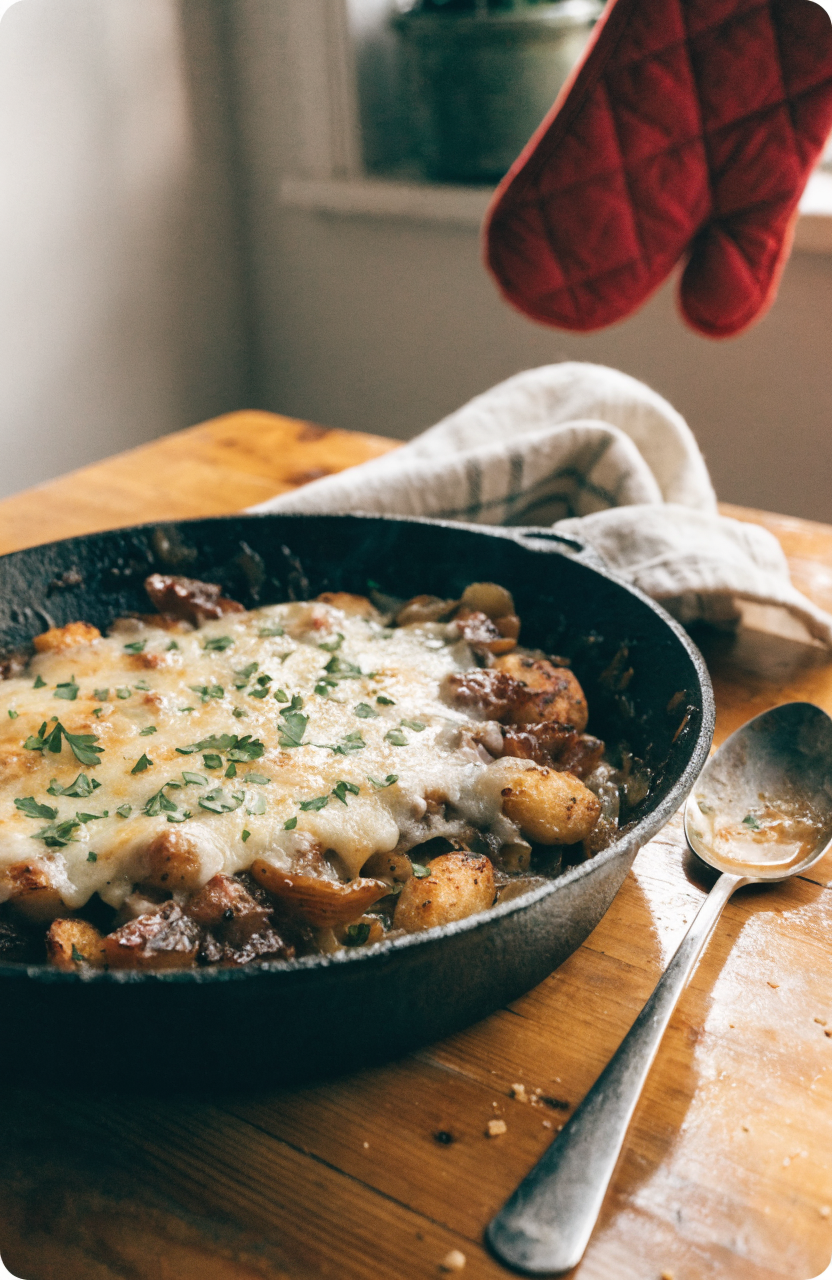
Why this French onion gnocchi works
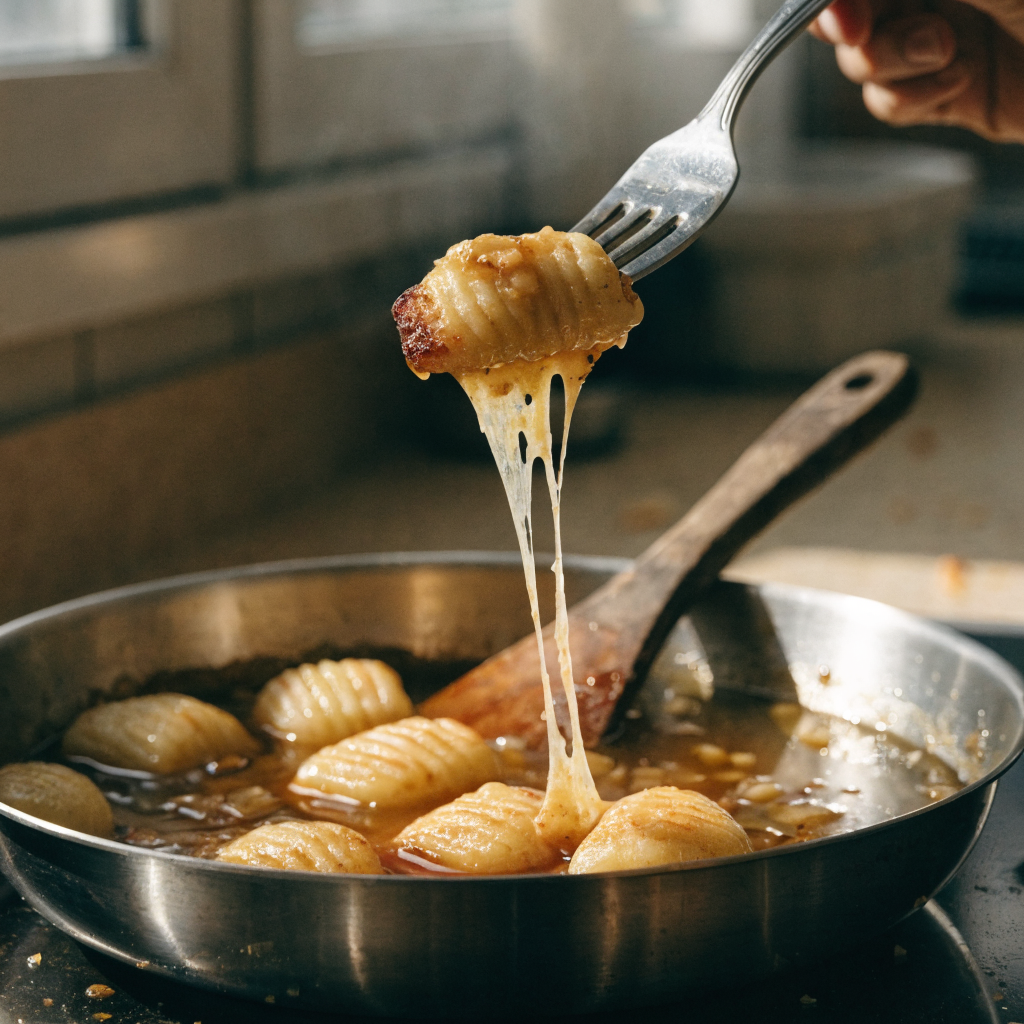
The trick that makes this French onion gnocchi dependable is a two-phase approach: deeply caramelize the onions to build a full-bodied, slightly sweet base, and separately sear the gnocchi to create a tender interior with a thin browned shell that resists turning soggy when simmered briefly in broth. During testing I found that adding cold gnocchi straight to a long-reducing sauce caused them to disintegrate and leach starch, making the sauce cloudy and gluey. What changed was insisting on a quick sear at medium-high heat to set the surface of the gnocchi and then finishing them in the pan with just enough reduced beef broth to coat and gloss the pieces. That produced a glossy, clingy sauce and distinct gnocchi texture—soft center, slight chew, and a subtle crust where they touched the pan.
Key takeaways
- Sear gnocchi briefly before simmering to preserve texture and prevent a watery sauce.
- Caramelize onions slowly for at least 30 minutes so their natural sugars create depth without needing extra sweeteners.
- Use a rich beef broth and reduce it to concentrate flavor; reserve some broth to adjust sauce consistency at the end.
- A final broil with grated Gruyère builds a golden, slightly chewy top that complements the soft gnocchi.
Ingredients you’ll need and what to substitute
For the onion base I use yellow onions because they caramelize predictably and develop a sweet-savory backbone without turning bitter. If you only have sweet onions or white onions, they’ll work but sweet onions may caramelize faster and require less stirring. Beef broth gives the sauce that classic French onion richness; if you prefer a milder flavor or need a lighter option, use low-sodium chicken broth and add a splash (1 teaspoon) of Worcestershire sauce for umami. Gruyère melts beautifully and browns under the broiler — fontina or a young cheddar can substitute but will change the final texture slightly. For the gnocchi, you can use store-bought potato gnocchi for speed or homemade potato gnocchi for a pillowy, fresh texture; homemade will absorb sauce differently and may cook a minute faster.
Key ingredient notes:
- Onions: slice evenly to ensure consistent caramelization.
- Beef broth: use low-sodium if possible so you can control seasoning at the end.
- Gnocchi: if frozen, thaw in the refrigerator and pat dry before searing to avoid steam and splatter.
- Butter and oil: a combination helps with browning and flavor; use unsalted butter if you want to control final salt.
Equipment
A good heavy-bottomed skillet (10–12 inches) is essential for even browning of both onions and gnocchi; a stainless-steel skillet or seasoned cast-iron skillet works best. You’ll also need a baking sheet that fits under your broiler, a microplane or box grater for the cheese, and a wooden spoon or heatproof spatula for scraping browned bits. A 3-to-4 quart saucepan is helpful if you want to keep reserved broth warm. If you make gnocchi from scratch, have a potato ricer or masher and a fork ready.
How to make French onion gnocchi
Phase 1: Caramelize the onions
Start by thinly slicing 2 pounds of yellow onions; aim for even 1/8- to 1/4-inch slices so they soften at the same rate. Heat a 12-inch skillet over medium heat and add 2 tablespoons neutral oil and 2 tablespoons unsalted butter. When the butter foams, add the onions and a generous pinch of salt; toss to coat. Reduce heat to medium-low and let the onions cook, stirring every 4–6 minutes to avoid burning. After about 20 minutes they’ll be soft and beginning to brown; at that point increase the heat briefly to medium to encourage deeper browning, then reduce again. Total caramelization time should be 35–40 minutes until the onions are a deep amber and mostly jam-like. If the pan looks dry, add 1–2 tablespoons water to deglaze and scrape the fond.
Phase 2: Build and reduce the sauce
When the onions are deeply caramelized, add 2 minced garlic cloves and cook for 30 seconds until fragrant. Stir in 1/3 cup low-sodium beef broth with 1 teaspoon balsamic vinegar to deglaze and scrape the browned bits from the pan. Add 2 1/2 cups low-sodium beef broth and 1 teaspoon fresh thyme leaves (or 1/2 teaspoon dried). Bring the mixture to a simmer and reduce uncovered until the sauce is flavorful and slightly thickened, about 12–15 minutes. Taste and adjust salt and pepper, remembering you’ll finish with cheese that adds saltiness.
Phase 3: Prepare and sear the gnocchi
If using store-bought fresh gnocchi, pat them dry with paper towels. Heat a separate 10-inch skillet over medium-high heat and add 1 tablespoon olive oil. Add gnocchi in a single layer without crowding — you may need to cook in batches. Let them sear without moving for 2–3 minutes until the bottom is golden, then flip to brown the other side for 1–2 minutes. The goal is a light crust; interior should still be tender. Transfer seared gnocchi to the pan with the reduced onion-broth sauce. If using frozen gnocchi, thaw fully and dry thoroughly; otherwise steam will prevent browning.
Phase 4: Finish in the sauce and broil
With the gnocchi in the onion sauce, stir gently to coat and simmer together for 2–3 minutes so the sauce clings but doesn’t soak into the gnocchi. If the sauce is too thick, add up to 1/4 cup reserved warm broth; if too thin, simmer 1–3 minutes to concentrate. Sprinkle 1 cup grated Gruyère evenly over the top, then slide the skillet under a hot broiler (about 500°F equivalent) for 2–4 minutes until the cheese bubbles and forms a light golden crust. Watch carefully so it doesn’t over-brown. Remove from heat and let rest for 2 minutes — the cheese will set slightly and the texture will be easier to serve.
Things I learned the hard way
- If you skip the sear, gnocchi absorb too much liquid and become gluey—searing forms a protective surface.
- Caramelize onions slowly; rushing with higher heat makes them bitter or burn before sugars develop.
- Adding too much broth at once dilutes the sauce; reserve some and finish by spooning in small amounts to hit the right gloss and coating.
- Using a single pan for everything seemed efficient but led to overcooked gnocchi; separate searing keeps the timing right.
- First attempt: I added gnocchi raw to the reducing onions and ended up with a cloudy, pasty sauce; solution: sear separately and simmer only briefly.
Variations to try
- Mushroom French onion gnocchi: add 8 ounces sliced cremini mushrooms to the onions when they are half-caramelized and cook until the mushrooms give up moisture and brown; reduce liquid a minute longer.
- Herb-and-lemon finish: stir in 1 tablespoon chopped parsley and 1 teaspoon lemon zest after broiling for a brighter contrast to the rich sauce.
- Chicken-broth version: swap beef broth for low-sodium chicken broth and add 1 teaspoon Worcestershire sauce to retain savory depth; reduce by the same time.
- Smoky twist: finish with a tablespoon of chopped roasted red peppers mixed in for color and a mild smoky note; no temperature changes needed.
Storage, freezing, and reheating
Refrigerate leftovers in an airtight container for up to 3 days. To reheat, place portions in a skillet over medium-low heat with a splash of broth (1–2 tablespoons) and warm, stirring gently until just heated through; this restores gloss without turning the gnocchi mushy. Freezing the finished dish is not recommended because the sauce and gnocchi will change texture. If you must freeze, store seared gnocchi separately on a baking sheet until solid, then transfer to a freezer bag for up to 2 months; thaw in the refrigerator overnight and reheat in a skillet with fresh onion sauce made from caramelized onions and broth.
What to serve with French onion gnocchi
This dish pairs well with crisp, acidic sides that cut through the richness. Try a simple arugula salad tossed with lemon vinaigrette, roasted green beans with a squeeze of lemon, or a bright shaved fennel and apple salad. For extra protein, thinly sliced roast beef or pan-seared chicken thighs served on the side work well because they can be seasoned simply and won’t compete with the onion-broth flavor.
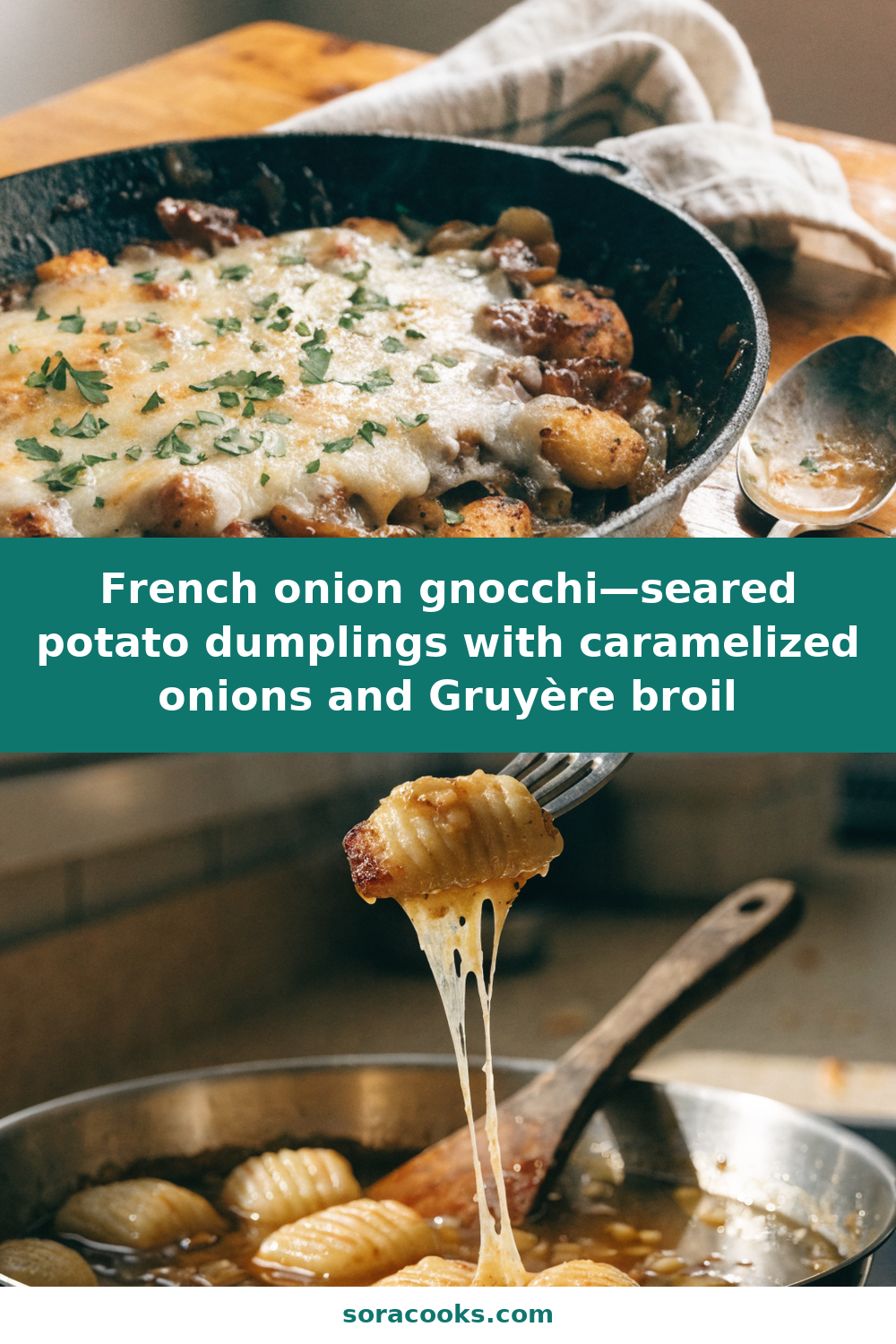
French Onion Gnocchi with Caramelized Onions and Gruyère
Ingredients
Equipment
Method
- Heat a 12-inch skillet over medium heat and add 2 tablespoons olive oil and 2 tablespoons unsalted butter; when butter foams add the sliced onions and 1 teaspoon salt and cook over medium-low, stirring every 4–6 minutes, for 35–40 minutes until deep amber, adding 1–2 tablespoons water if the pan gets dry.
- Stir in the minced garlic and cook 30 seconds, add 1/3 cup broth with 1 teaspoon balsamic vinegar to deglaze scraping the fond, then add 2 1/2 cups beef broth and thyme; bring to a simmer and reduce uncovered for 12–15 minutes until slightly thickened and flavorful, then season to taste with salt and pepper.
- Pat gnocchi dry; heat a 10-inch skillet over medium-high heat with 1 tablespoon olive oil, add gnocchi in a single layer (work in batches if needed) and sear 2–3 minutes without moving until golden, flip and brown the other side 1–2 minutes, then transfer to the onion-broth sauce.
- Toss the seared gnocchi gently in the sauce and simmer 2–3 minutes so the sauce clings; adjust consistency with up to 1/4 cup reserved warm broth if needed, sprinkle 1 cup grated Gruyère evenly over the top and broil 2–4 minutes until the cheese bubbles and turns light golden; let rest 2 minutes before serving.
Notes
Frequently asked questions
Can I use frozen gnocchi for this recipe? Yes — thaw completely in the refrigerator and pat dry before searing to prevent steaming and splatter; cooking times will be about the same after thawing.
Why did my sauce become watery? Most watery sauces result from adding too much broth at once or not reducing the broth enough. Reserve some broth, reduce what you add, and stir in small amounts to adjust consistency.
Do I have to broil the dish with cheese? No, broiling adds a caramelized top and a slightly chewy bite that I prefer, but you can cover and warm the cheese until melted without broiling if broiling isn’t convenient.
Can I make the onions ahead of time? Absolutely — caramelized onions keep in the refrigerator for up to 5 days and make weeknight assembly quick; reheat gently before adding broth and gnocchi.
How do I prevent gnocchi from sticking together? Sear them in a single layer without crowding, use a hot pan with a little oil, and transfer them into the sauce promptly after searing so they don’t clump as they cool.
Is it safe to use store-bought gnocchi? Yes, store-bought gnocchi are a convenient shortcut; treat them like fresh gnocchi for searing and finishing in the sauce to maintain the intended texture.
Closing
My French onion gnocchi keeps the soft, pillowy interior I love while adding a slight crust and a glossy, concentrated onion-broth coating that resists turning watery—it’s the version I reach for when I want that soup-like flavor with a contrasting texture, and it always makes the kitchen smell like a cozy dinner is on the way.

Leave a Reply