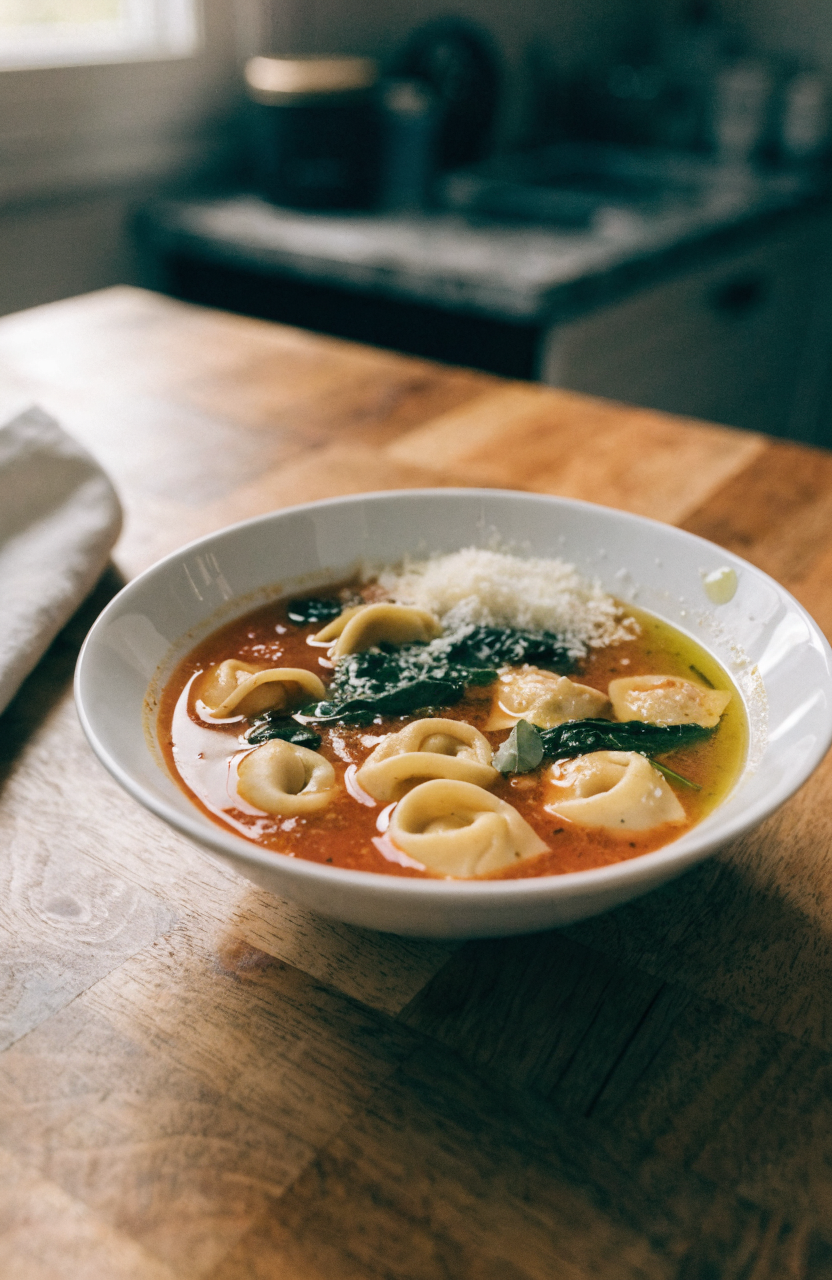
When I first made this tomato tortellini soup I wanted a bowl that felt both silky and substantial—saucy enough to coat the tortellini, but still clearly a soup. The tomato tortellini soup recipe here started with that problem: my early attempts produced either a thin broth or gummy pasta. I solved it by concentrating the tomato base, timing the tortellini so it finishes off the heat, and adding a small amount of cream and olive oil for a satiny texture. If you value precise temperatures and texture cues, this recipe will get you a reliably smooth, spoonable soup every time.
Why this tomato tortellini soup works
The key technique is twofold: build a concentrated tomato broth and control the tortellini timing. I reduce part of the canned tomato with aromatics so the soup has body without excess starch, then add store-bought fresh or frozen cheese tortellini at the end so the pasta cooks in the hot broth off the full boil, preventing overcooking and starch clouding. During testing I first simmered tortellini for the full time in the pot and ended up with a cloudy, gluey broth; finishing the tortellini gently off the boil and stirring in a splash of cream and olive oil produced a clearer, velvety texture while still giving the pasta a tender bite.
Key takeaway
- Concentrated tomato base gives body without heaviness.
- Finish tortellini off high heat to avoid starchy broth and overcooked centers.
- Small amount of fat (olive oil or cream) smooths texture and rounds flavors.
Key takeaways
- Reduce part of the tomatoes with aromatics to thicken the broth naturally.
- Add tortellini at the very end and finish cooking off the boil for perfect texture.
- Use olive oil and a touch of cream or mascarpone to round the mouthfeel.
Ingredients you’ll need and what to substitute
This tomato tortellini soup relies on canned tomatoes, a small amount of tomato paste, aromatics, and either fresh or frozen cheese tortellini. I use one 28-ounce can of whole peeled tomatoes and one 14-ounce can of diced tomatoes; reducing the whole tomatoes creates a concentrated base while the diced add body and texture. If you prefer a brighter flavor, swap one can for crushed tomatoes but shorten the reduction slightly. Use chicken or vegetable broth depending on your preference—both work; vegetable broth keeps it veg-friendly. For cheese, fresh refrigerated tortellini cooks faster and keeps a soft texture; frozen tortellini requires an extra 2–4 minutes and should be added straight from the freezer.
Substitutions that work: substitute mascarpone or half-and-half for the cream (same smoothing effect), use turkey or rotisserie chicken (shredded) for added protein (add with the tortellini), and swap fresh basil for 1 teaspoon dried basil (but add earlier to allow rehydration). If you need a budget option, smaller cans of crushed tomatoes concentrate faster and are usually cheaper than whole-peeled cans.
Equipment
- 6-quart Dutch oven or large heavy-bottomed pot
- Immersion blender (optional) or regular blender to smooth part of the tomatoes
- Wooden spoon or heatproof spatula
- Measuring cups and a fine-mesh strainer (optional)
How to make tomato tortellini soup
Make the concentrated tomato base
Start by warming 2 tablespoons of olive oil in a 6-quart Dutch oven over medium heat until shimmering. Add 1 medium yellow onion (finely diced) and 2 medium carrots (small dice) and sauté until the onion is translucent, about 6–7 minutes; the carrots give a subtle sweetness that balances the tomatoes. Add 3 garlic cloves (minced) and cook 30–45 seconds until fragrant. Stir in 2 tablespoons tomato paste and cook 1 minute to caramelize the paste—this deepens flavor and removes raw acidity.
Add one 28-ounce can whole peeled tomatoes (crushed by hand or with a wooden spoon) and one 14-ounce can of diced tomatoes with their juices, plus 3 cups low-sodium chicken or vegetable broth. Bring to a lively simmer, then lower heat to medium-low and simmer uncovered for 15–18 minutes to concentrate flavors. Taste and add 1 teaspoon kosher salt and 1/2 teaspoon black pepper, adjusting after the tortellini is in the pot.
Smooth and finish the broth
For a silkier texture, remove about 2 cups of the soup to a blender or use an immersion blender to purée until smooth; return it to the pot and stir. If you prefer a chunkier soup, skip puréeing and only mash a few tomato pieces with the back of a spoon. At this point stir in 1 teaspoon dried oregano and 1/2 teaspoon red pepper flakes if you like a little warmth. Keep the soup at a gentle simmer; do not boil vigorously when the pasta is in the pot.
Finish the tortellini without overcooking
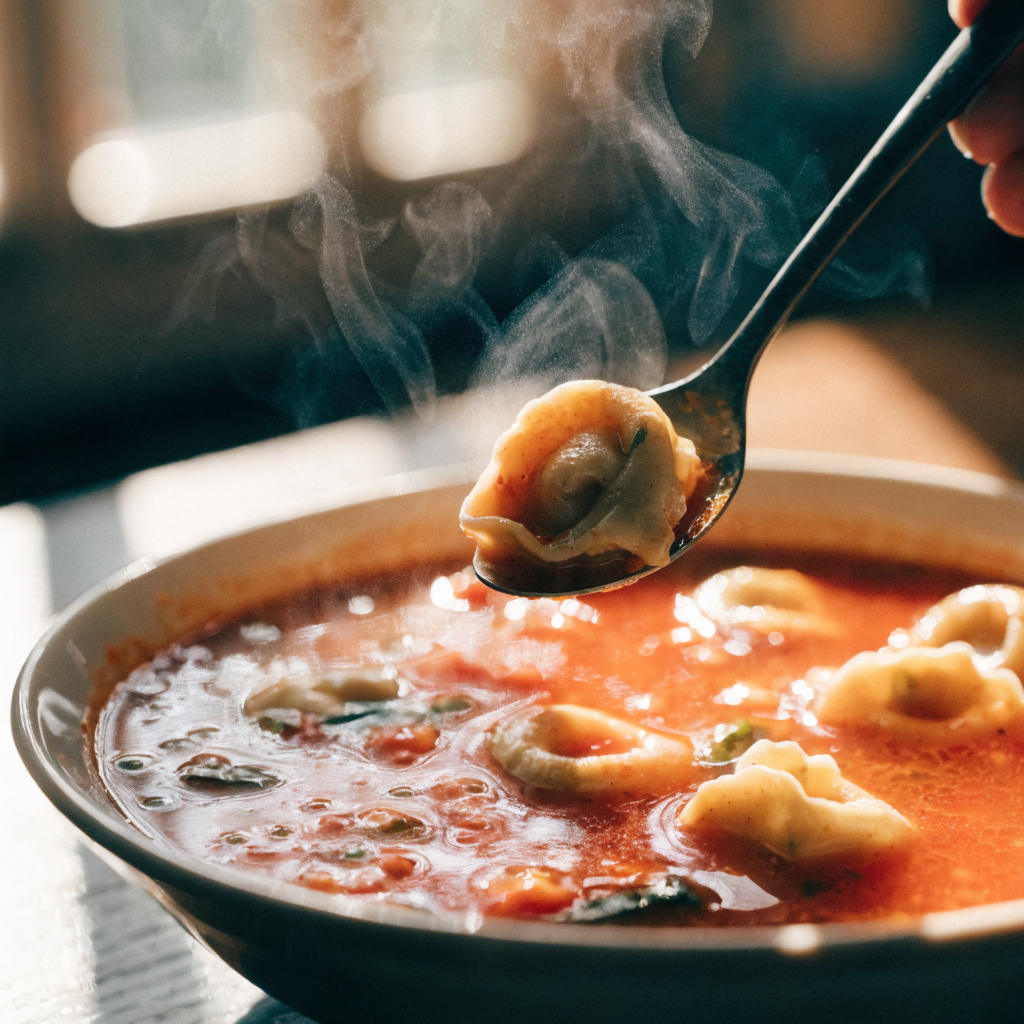
Increase heat briefly to bring the soup to a simmer, then add 12 ounces fresh or frozen cheese tortellini. Stir gently, bring back up to a simmer, and start timing: fresh tortellini needs about 3–4 minutes; frozen needs about 5–6 minutes. The most important thing: when the tortellini is just tender (taste one), turn off the heat and cover the pot. Let residual heat finish the pasta for 1–2 minutes—this prevents the pasta from releasing too much starch into the broth and keeps the centers from becoming gummy.
After the covered rest, stir in 1/4 cup heavy cream or 3 tablespoons mascarpone for a silky finish, plus 2 tablespoons extra-virgin olive oil for gloss. Taste and adjust salt and pepper, then fold in 1 cup packed fresh baby spinach and 1/3 cup chopped fresh basil; they wilt quickly in the hot soup. Serve hot with grated Parmesan on the side.
Things I learned the hard way
- Don’t overboil the tortellini: a rolling boil makes the pasta fall apart and clouds the broth. Finish on residual heat instead.
- A single can of tomatoes rarely has enough body—combining and reducing one can while leaving another chunkier balances texture.
- Skipping the tomato paste produced a thinner, flatter soup—browning the paste makes a noticeable difference in depth.
- Using only water or low-flavor broth left the soup tasting dilute; use at least low-sodium broth for better body.
- Adding dairy too early caused separation—stir cream in after the pot is off to keep it silky.
- First attempt mistake: I added frozen tortellini to cold broth and boiled it 10 minutes; the centers stayed gummy. Fix: bring broth to simmer, add pasta, then rest covered off heat.
Variations to try
- Roasted garlic and roasted tomatoes: roast a head of garlic and 2 pints cherry tomatoes until caramelized, then blend with part of the base—reduce the broth time by 5 minutes.
- Meaty version: stir in 1 cup shredded rotisserie chicken when you add the tortellini; no temperature change needed but add 2 minutes of covered rest.
- Spicy sausage substitute: use cooked turkey or chicken sausage sliced and sautéed with the aromatics; drain excess fat before adding tomatoes.
- Vegan swap: replace cream with 3 tablespoons cashew cream and use vegan tortellini; add cashew cream off heat.
Storage, freezing, and reheating
Refrigerate leftover soup in airtight containers for up to 3 days; store tortellini and broth together but expect the pasta to soak up some liquid and become softer. To reheat, warm gently on the stove over low–medium heat until steaming, adding 1/4 cup broth or water if it seems thick. Freezing is not recommended when tortellini is already cooked—the pasta becomes mushy when thawed. If you want to freeze, freeze the broth base only (before adding tortellini) for up to 3 months in freezer-safe containers; thaw overnight in the refrigerator and heat, then add fresh or frozen tortellini and finish as directed.
What to serve with tomato tortellini soup
- Garlic bruschetta or torn crusty bread for dipping
- Simple green salad with lemon vinaigrette for brightness
- Roasted vegetables like broccoli or Brussels sprouts for contrast
- Parmesan crisps or a handful of toasted pine nuts for crunch
Tomato Tortellini Soup
Ingredients
Equipment
Method
- Heat 2 tablespoons olive oil in a 6-quart Dutch oven over medium heat until shimmering, then add diced onion and carrots and sauté until the onion is translucent, about 6–7 minutes.
- Add minced garlic and cook 30–45 seconds until fragrant, then stir in tomato paste and cook 1 minute to deepen flavor.
- Add crushed whole tomatoes and diced tomatoes with juices plus 3 cups broth, bring to a lively simmer, then reduce heat to medium-low and simmer uncovered for 15–18 minutes to concentrate.
- Remove about 2 cups of the soup and purée until smooth using an immersion blender or regular blender (or use immersion blender directly in pot), then return to pot; stir in oregano and red pepper flakes if using and keep at a gentle simmer.
- Increase heat briefly to bring the soup back to a simmer, add 12 ounces tortellini, stir gently and cook until just tender (fresh 3–4 minutes, frozen 5–6 minutes), then immediately turn off heat and cover the pot for 1–2 minutes to finish cooking off heat.
- Uncover and stir in 1/4 cup heavy cream or 3 tablespoons mascarpone and 2 tablespoons olive oil, then fold in baby spinach and chopped basil until wilted; taste and adjust salt and pepper.
- Serve hot with grated Parmesan on the side.
Notes
Frequently asked questions
Can I use dry tortellini instead of fresh or frozen? Yes, but dry tortellini typically needs a longer cooking time (7–9 minutes) and releases more starch; add it earlier and expect a slightly thicker broth—watch texture and reduce simmering time if the pasta starts to fall apart.
How do I prevent the soup from becoming watery? Reduce part of the tomatoes and use tomato paste to concentrate flavors; avoid overcooking the pasta in the pot and finish cooking off the heat to reduce starch release.
Can I make this ahead? Make the tomato base up to 3 days ahead and refrigerate; reheat and add fresh or frozen tortellini just before serving for best texture.
Is it safe to add frozen tortellini straight to the soup? Yes—add frozen tortellini to the simmering soup and allow an extra 2–4 minutes, then finish covered off heat for best results.
Will the cream make the soup heavy? I use only 1/4 cup of cream for the whole pot; it adds silkiness without making the soup heavy—use mascarpone or half-and-half for lighter texture.
Closing
This tomato tortellini soup brings a focused texture strategy to a classic bowl: concentrated tomato flavor, careful pasta timing, and a small finishing fat for silkiness. It warmed my kitchen with bright tomato aroma, had tender but not mushy tortellini, and felt both spoonable and satisfying—exactly what I aimed for when I started testing it. When you make it, taste and adjust seasonings at the end and consider serving with grated Parmesan and torn basil for freshness and contrast.

Leave a Reply