I first made this watermelon feta salad on a scorching July afternoon because the usual leafy greens felt limp and uninteresting; I wanted something crisp, cold, and texturally surprising. The watermelon feta salad idea puts bright, chilled watermelon cubes together with creamy, crumbly feta and snappy basil ribbons so each bite has contrast — I’ll show you the exact chill, drain, and dressing steps that keep the melon from watering down the whole bowl. This version focuses on texture cues and batch guidance so the salad stays fresh for a backyard gathering.
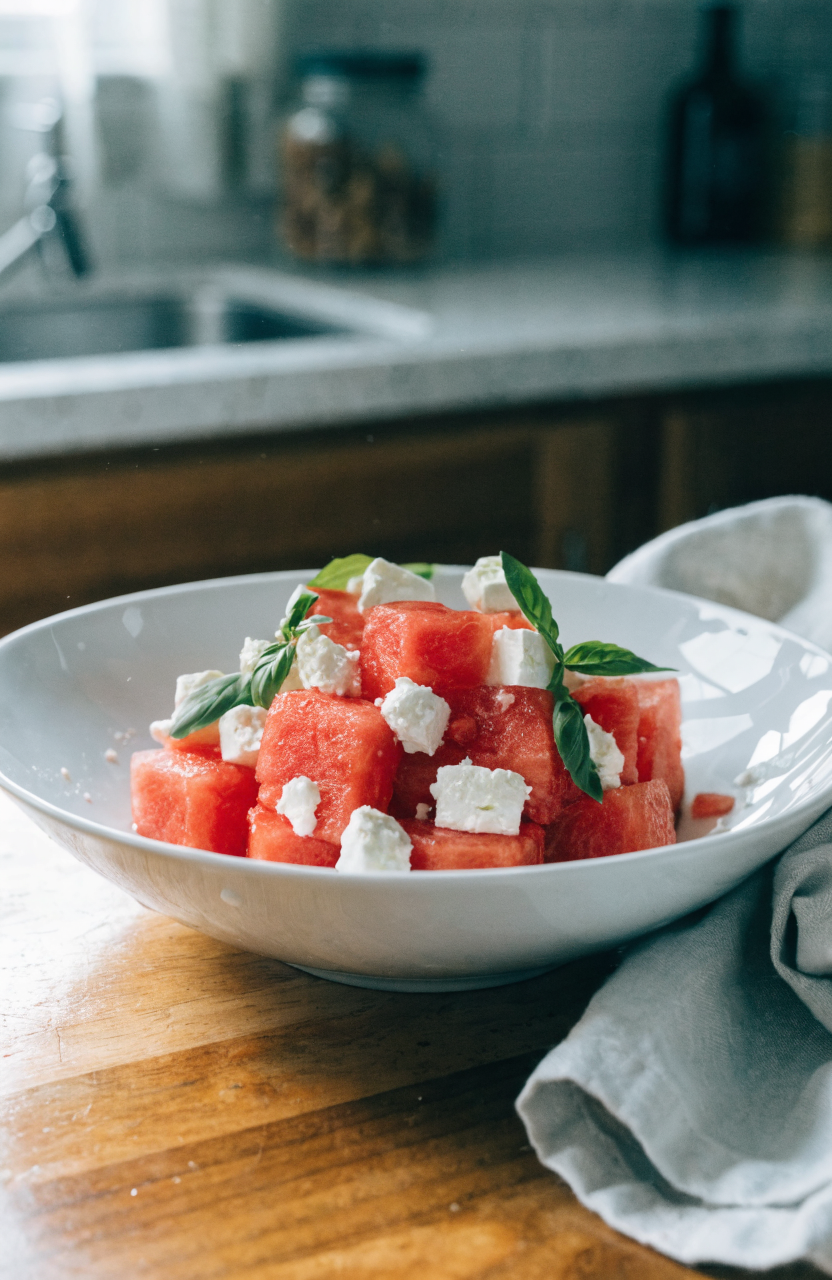
Why this watermelon feta salad works
The key technique here is controlling moisture and temperature. Watermelon has a high water content, and when you cube it and toss it with a dressing, that juice can make feta soggy and wilt fresh herbs. I tested several approaches and settled on three changes that made a consistent, texturally pleasing salad: chill the whole melon and feta before assembly, drain cubed melon in a fine-mesh sieve for 10–15 minutes to remove loose juice, and finish with a lightly reduced honey-balsamic glaze that clings to the fruit without pooling. Those steps preserve the watermelon’s snap, keep feta crumbly rather than chalky, and let basil stay bright and tender rather than limp.
Key takeaways
- Chill and drain the watermelon to prevent a watery salad.
- Use a quick honey-balsamic glaze instead of a watery vinaigrette so the dressing sticks.
- Layer textures: crisp watermelon, creamy feta, and thin basil ribbons for contrast.
Ingredients you’ll need and what to substitute
This salad uses a short ingredient list, but each item matters for texture. Seedless watermelon is easiest to cube cleanly; the fruit should be firm enough to hold shape. Block feta works better than pre-crumbled because it has less surface area exposed to moisture — crumble it yourself and keep it chilled until assembly. Fresh basil ribbons add a peppery, aromatic snap; if you don’t have basil, thinly sliced mint makes a brighter, cooler flavor but will change the aroma. I use a honey-balsamic glaze (balsamic reduced with a touch of honey) so the dressing becomes slightly syrupy and clings to the melon. If you prefer a dairy-free option, swap feta with a pressed, tangy plant-based cheese, but expect a softer mouthfeel. For a budget-friendly option, use reduced-fat feta or buy a small block and crumble — the texture difference is minor when the salad is assembled correctly.
Equipment
You don’t need fancy gear, but a few tools help keep textures right. A sharp chef’s knife and a large cutting board make clean, uniform cubes. A fine-mesh sieve or colander plus a rimmed baking sheet collects drained watermelon juice without a mess. Use a small saucepan to reduce the balsamic. For serving, a large shallow bowl or platter makes it easy to layer and serve without compacting the salad.
How to make watermelon feta salad
Prepare and chill the ingredients
Start by chilling your whole seedless watermelon and the block of feta in the refrigerator for at least 2 hours; cold ingredients hold texture better. While they chill, place a fine-mesh sieve over a rimmed baking sheet so it’s ready for draining. Also, set a small saucepan on the stove for the glaze.
Cube, drain, and salt the watermelon
Trim the watermelon rind and cut the flesh into uniform 1-inch cubes — aim for consistency so each bite has the same textural experience. Place the cubes in the sieve and let them drain for 10–15 minutes; you’ll see a little pink liquid collect in the pan. Lightly sprinkle the drained cubes with 1/4 teaspoon fine sea salt and toss gently; this brief seasoning opens the flavor without drawing out more juice. The visual cue you want is watermelon that shines but doesn’t swim in pooled liquid.
Make the honey-balsamic glaze
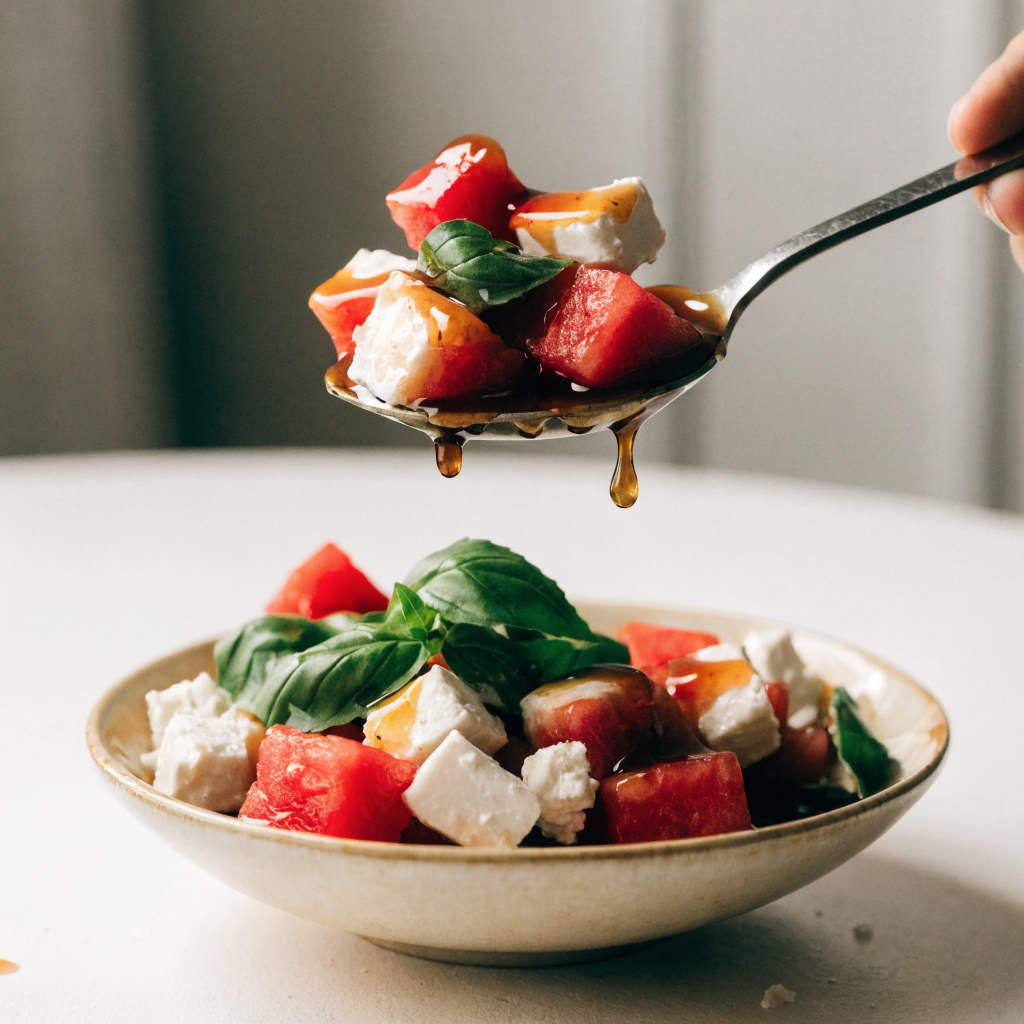
In a small saucepan, combine 1/2 cup balsamic vinegar and 2 tablespoons honey. Bring to a gentle simmer over medium heat, then reduce to low and simmer until reduced by about half and slightly syrupy, about 6–8 minutes. Watch for a few slow, thick ribbons when you tip the pan — that’s the sign the glaze will cling instead of pooling. Remove from heat and cool to warm; it will thicken as it cools.
Assemble just before serving
Place drained watermelon cubes in a large shallow bowl or platter. Crumble chilled feta over the top in larger chunks rather than powdery dust — that preserves the creamy pockets in the salad. Add basil ribbons: stack leaves, roll tightly, and slice thinly across to make long, delicate ribbons that fold and snap. Lightly drizzle 1–2 tablespoons of the warm (not hot) honey-balsamic glaze over the salad and gently toss with two large spoons so the glaze coats without bruising the basil. Finish with a quick crack of black pepper and a sprinkle of flaky sea salt if needed. Taste a piece to confirm balance: a bright, slightly sweet-sour glaze, cool crisp melon, and creamy feta in the same mouthful are the goal.
Things I learned the hard way
- If you skip chilling the melon and feta, the feta absorbs moisture and becomes chalky; refrigeration for at least two hours keeps the curds firm.
- Using a watery vinaigrette made the bowl soggy in 10–15 minutes; reducing the balsamic into a glaze solves that.
- Cutting inconsistent cube sizes leads to rapid breakdown of smaller pieces; aim for uniform 1-inch cubes.
- I once tossed the salad with basil too early and the leaves turned dark; add basil at the last moment to keep it glossy.
- Over-reducing balsamic makes it too sticky once cold; reduce until slightly syrupy and remember it thickens as it cools.
- First attempt had pre-crumbled feta that dissolved into the salad — chopping a block into rough chunks fixes the texture.
Variations to try
- Spicy Kick: Add 1 small thinly sliced jalapeño (seeds removed for mild heat) and replace half the honey with agave; no timing change required but tell guests there’s heat.
- Grain Bowl: Add 2 cups cooked, cooled farro and double the glaze to moisten the grains; serve slightly chilled and allow a 10-minute resting time for flavors to meld.
- Summer Citrus: Add 1/3 cup segmented orange supremes and swap basil for mint; expect a juicier salad so drain watermelon 5 minutes longer.
- Greens Mix: Serve the watermelon feta salad over peppery arugula; toss greens with 1 teaspoon olive oil right before plating to avoid wilting.
Storage, freezing, and reheating
This salad is best served within 2–6 hours of assembly. Refrigerator storage: if you must store leftovers, keep watermelon and feta separated in airtight containers; they will keep 2–3 days, but texture softens after the first day. Do not freeze the finished salad — frozen watermelon becomes waterlogged and grainy. To refresh refrigerated leftovers, drain any collected liquid, pat the melon gently with paper towels, and add a fresh drizzle of glaze and fresh basil just before serving. Reheating is not applicable; serve chilled or room temperature.
What to serve with watermelon feta salad
This salad pairs well with grilled chicken skewers, crusty sourdough bread, or a simple lemon-herb pasta. For a picnic or BBQ, serve alongside herb-roasted potatoes, a light couscous salad, or chilled shrimp for a balanced spread. The salad’s bright acidity and sweet notes complement smoky grilled mains and creamy dips.
For sit-down dinners, consider plating the salad on small chilled plates so it stays crisp until the first bite. When serving a larger group, arrange the bowl on a bed of lightly oiled greens to create a composed platter that still benefits from the chill-and-drain routine. These small service steps keep the textures consistent from the first serving to the last.
Chilled Watermelon Feta Salad with Honey-Balsamic Glaze
Ingredients
Equipment
Method
- Chill the whole watermelon and the block of feta in the refrigerator for at least 2 hours before starting to keep textures firm.
- Trim the rind and cut the watermelon into uniform 1-inch cubes; place the cubes in a fine-mesh sieve set over a rimmed baking sheet and drain for 10–15 minutes, then sprinkle with 1/8 teaspoon of the sea salt and toss gently.
- In a small saucepan combine balsamic vinegar and honey; bring to a gentle simmer over medium heat, then reduce to low and simmer until reduced by about half and slightly syrupy, about 6–8 minutes; remove from heat and let cool to warm.
- Place drained watermelon cubes in a large shallow bowl, crumble chilled feta over the top in larger pieces, add basil ribbons, and optionally add jalapeño or orange segments; drizzle 1–2 tablespoons of the warm honey-balsamic glaze and gently toss to coat, finishing with a crack of black pepper and a sprinkle of flaky sea salt if desired.
- Serve immediately or assemble within 30 minutes of serving for best texture.
Notes
Frequently asked questions
Can I make watermelon feta salad ahead of time? Yes, but keep components separate: cube and drain the watermelon up to 4 hours ahead and store chilled, crumble feta in a covered container, and make the glaze early; assemble within 30 minutes of serving to preserve texture.
Why did my salad get watery? The most common reason is using room-temperature melon or tossing with a runny dressing; always chill and drain the melon, and use a reduced glaze rather than a loose vinaigrette.
Can I use pre-crumbled feta? You can, but pre-crumbled feta often absorbs more liquid and turns mealy; I recommend buying a small block and crumbling by hand for better texture.
How long will leftovers last? Leftover components stored separately last 2–3 days in the refrigerator; assembled salad loses crispness quickly and is best eaten the same day.
Can I use other melons? Yes — cantaloupe or honeydew work, but they are usually less juicy; adjust draining time and taste for sweetness before dressing.
Is there an alternative to basil? Mint or thinly sliced baby arugula both work; mint brightens the salad while arugula adds a peppery bite — add them right before serving.
Closing
This watermelon feta salad balances crisp-cold melon, creamy feta, and a sticky-sweet balsamic glaze to deliver consistent texture in every bite — follow the chill-and-drain routine, and you’ll notice the difference at your next summer gathering. Serve within a few hours for the best contrast of textures and flavors.

Leave a Reply