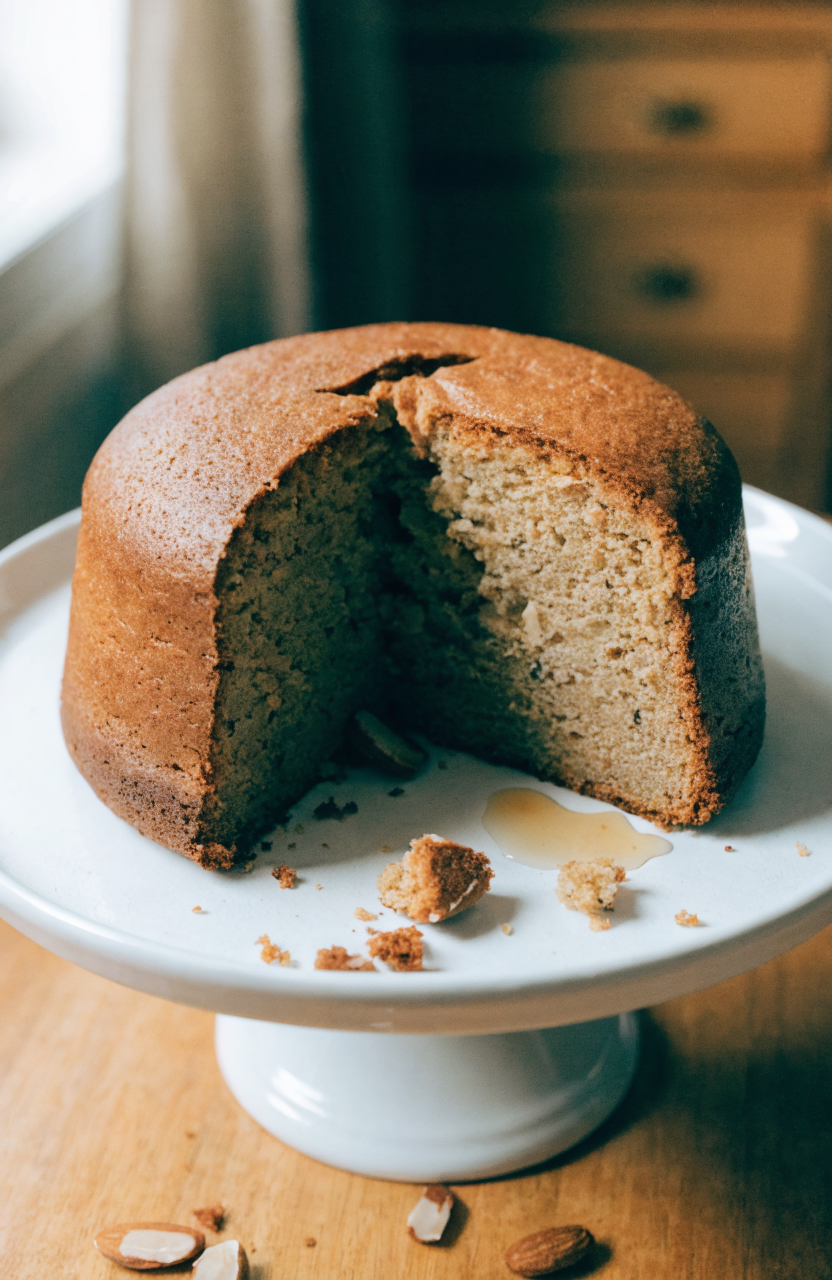
I remember the first time I tried to make an almond cardamom cake: the almond flavor was there, but the crumb came out tight and dry. After a few tests I landed on a technique that keeps this almond cardamom cake tender and aromatic—whipped egg whites for lightness plus a quick almond-scented sugar syrup to lock in moisture. If you care as much about crumb texture as the spice notes, this is the version I keep making.
Why this almond cardamom cake works
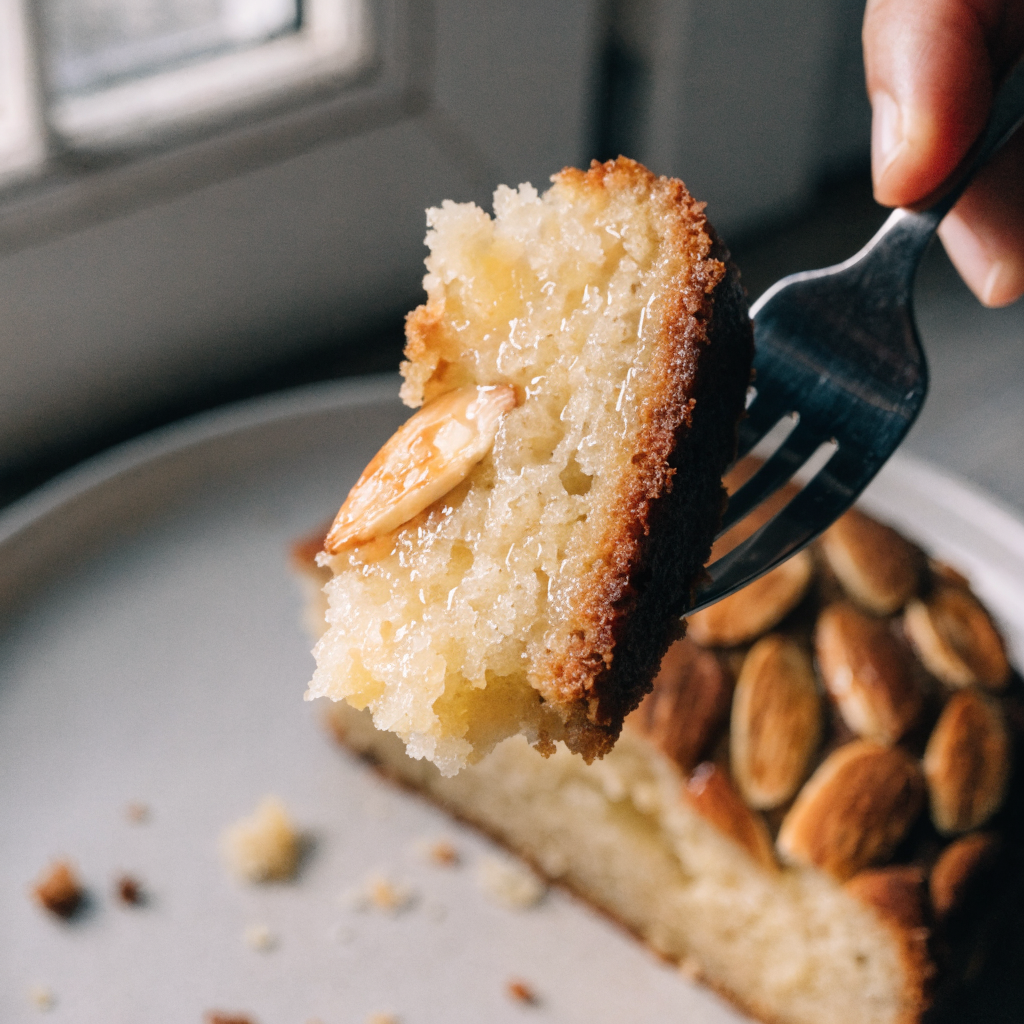
The key technique is simple: combine a dense, almond-meal batter with deliberately whipped egg whites to introduce air without changing the cake’s moist, close crumb. Almond meal adds flavor and a satisfying grain; cardamom provides a bright, warm note that can disappear if you overbake. During testing I found the most common problem was a dry edge with a gummy center. What changed was twofold: I reduced oven temperature slightly and added a hot sugar-almond syrup brushed over the cake as soon as it came from the oven. That syrup soaks into the crumb, preserving moisture and giving the surface a glossy sheen that keeps slices soft for a few days.
Key takeaways
- Whip egg whites separately and fold them in gently for lift without losing almond texture.
- Finish with a hot almond-scented sugar syrup to retain long-lasting moisture.
- Bake at a moderate 325–335°F to avoid dry edges and a gummy center.
Ingredients you’ll need and what to substitute
This almond cardamom cake depends on three main parts: almond meal (for structure and flavor), whole eggs and whipped whites (for lift), and a small amount of all-purpose flour (to stabilize the crumb). Use fine almond meal for the smoothest texture; if you only have coarse almond flour, pulse it briefly in a food processor. Ground cardamom is potent—measure it carefully. If you prefer a more subtle floral aroma, add a teaspoon of orange zest in the batter. For a nut-free swap, this recipe is not suitable without more method changes because almond meal is central to texture and moisture.
Realistic substitutions: replace 2 tablespoons of the almond meal with 2 tablespoons of all-purpose flour if almond meal is low in the pantry (texture will be slightly less tender). Swap whole milk for unsweetened almond milk for a lighter flavor (no timing change). Use vanilla extract instead of almond extract if you want a subtler almond note, but the syrup should retain at least 1/2 teaspoon almond extract to enforce the almond character.
Equipment
You don’t need fancy tools, but a few items make the process consistent. Use a 9-inch springform pan or a 9-inch round cake pan with a removable bottom to avoid jostling the cake when removing it. A stand mixer or hand mixer is required to whip the egg whites. A small saucepan for the syrup and an offset spatula or pastry brush finish the cake best. If you have a digital thermometer it’s useful for confirming oven accuracy; aim for 325–335°F.
How to make almond cardamom cake
Prepare and preheat
Preheat the oven to 330°F. Butter a 9-inch springform pan and line the bottom with parchment; dust the sides lightly with a tablespoon of almond meal to help the cake release cleanly. Let room-temperature eggs sit on the counter while you measure dry ingredients so they come to the right temperature for whipping.
Make the batter
In a medium bowl whisk together 2 cups fine almond meal, 3/4 cup granulated sugar, 1/4 cup all-purpose flour, 1 1/2 teaspoons baking powder, 1/2 teaspoon kosher salt, and 1 teaspoon ground cardamom until evenly distributed. In a separate large bowl, beat 3 large eggs yolks with 1/3 cup vegetable oil and 1/3 cup whole milk (or unsweetened almond milk) and 1 teaspoon almond extract until the mixture looks slightly thickened and pale. Stir the dry mix into the yolk mixture until combined; the batter will be denser than typical cake batters.
Whip egg whites and fold
Using a clean bowl and whisk attachment, whip 3 large egg whites with an electric mixer: start on medium speed until frothy, then add 2 tablespoons sugar slowly and continue to stiff peaks. Fold one-third of the whipped whites into the almond batter to loosen it, then gently fold in the remaining whites carefully to keep as much air as possible. Overfolding will deflate the batter and result in a denser cake.
Bake and syrup finish
Pour the batter into the prepared pan and smooth the top. Bake on the middle rack at 330°F for 35–45 minutes. Begin checking at 30 minutes: the cake’s edges should pull slightly away from the pan and the center should spring back when lightly pressed; a thin skewer inserted in the edge center will come out with a few moist crumbs but not wet batter. If the top browns too quickly, tent loosely with foil after 25 minutes. While the cake bakes, make the syrup: in a small saucepan combine 1/3 cup granulated sugar, 1/3 cup water, 1/2 teaspoon almond extract, and a 1/4 teaspoon ground cardamom; bring to a simmer and cook 2 minutes until syrupy, then keep warm. When the cake comes from the oven, brush the hot syrup evenly over the top while the cake is still hot so it absorbs. Cool in the pan on a rack for 20 minutes, then remove the outer ring and cool completely on the rack before slicing.
Things I learned the hard way
- Don’t skip whipping the whites: my first attempt without them gave a compact, heavy slice. Folding in whites adds lift without losing almond texture.
- Lower oven temperature helps: initially I baked at 350°F and got dry edges with a raw center. Dropping to 330°F and extending time fixed that.
- Brush the syrup while the cake is hot: I once waited and the syrup mostly ran off. Hot crumb soaks it; cool crumb repels it.
- Measure cardamom gently: too much cardamom overwhelms the almond; I reduced it after an overly spicy first trial.
- Fine almond meal yields the best crumb: coarse grain can make the cake feel sandy; a quick pulse in a processor smooths it.
- Use a springform or removable-bottom pan: earlier I flipped the cake and imperceptible cracks formed. Removing the ring avoids that risk.
Variations to try
Orange-Cardamom Almond Cake: add 1 teaspoon orange zest to the batter and replace the almond extract in the syrup with 1/2 teaspoon orange extract; no timing change. Honey-Glazed Version: substitute 1/4 cup honey for half the syrup sugar and warm it gently to combine—expect a slightly darker top. Pistachio Almond Cake: fold 1/2 cup finely chopped toasted pistachios into the batter and sprinkle 2 tablespoons on top before baking; this increases apparent density slightly but adds crunch, so check doneness a few minutes earlier.
Storage, freezing, and reheating
Store the cooled cake at room temperature, covered loosely with a cake dome or foil, for up to 2 days. The syrup helps keep it moist; refrigeration dries this cake faster, so avoid the fridge unless your kitchen is very warm—if refrigerated, bring to room temperature before serving to restore tenderness. For longer storage, slice and freeze individual slices wrapped tightly in plastic and placed in a freezer bag for up to 2 months. Thaw in the refrigerator overnight, then warm gently in a 300°F oven for 8–10 minutes to revive softness.
What to serve with almond cardamom cake
This cake pairs well with lightly whipped cream or a dollop of Greek yogurt sweetened with a teaspoon of honey and a pinch of cardamom. For a brunch, serve with sliced fresh figs or poached pears. A hot cup of black tea or a milky cardamom latte complements the cake’s nutty spice.
Almond Cardamom Cake (Moist, Textured Almond Meal Cake)
Ingredients
Equipment
Method
- Preheat oven to 330°F. Butter a 9-inch springform pan and line the bottom with parchment; dust the sides with 1 tablespoon almond meal.
- In a bowl whisk together 2 cups almond meal, 3/4 cup sugar, 1/4 cup flour, 1 1/2 teaspoons baking powder, 1/2 teaspoon salt, and 1 teaspoon cardamom. In a separate bowl whisk egg yolks with 1/3 cup oil, 1/3 cup milk, and 1 teaspoon almond extract until slightly thickened. Stir dry ingredients into the yolk mixture until combined.
- In a clean bowl whip 3 egg whites until frothy, add 2 tablespoons sugar gradually, and beat to stiff peaks. Fold one-third of the whites into the batter to loosen, then gently fold in remaining whites until just combined.
- Pour batter into the prepared pan and smooth the surface. Bake on the middle rack for 35–45 minutes, checking at 30 minutes. The cake is done when the edges pull away slightly and the center springs back with a light press, or a skewer shows moist crumbs but not wet batter.
- While the cake bakes, combine 1/3 cup sugar, 1/3 cup water, 1/2 teaspoon almond extract, and 1/4 teaspoon cardamom in a small saucepan; bring to a simmer and cook 2 minutes, then keep warm. Remove cake from oven and brush the hot syrup evenly over the top. Cool in the pan for 20 minutes before removing the ring and cooling completely on a rack.
- If desired, sprinkle toasted sliced almonds on top and dust lightly with powdered sugar before slicing.
Notes
Frequently asked questions
Can I use almond flour instead of almond meal? Yes, but choose fine almond flour; coarse almond flour can make the crumb grainy. Pulse briefly in a food processor if needed.
Why is my cake dry? Dryness usually means overbaking or too-high temperature; lower the oven to 330°F and check earlier. Also ensure you brush the hot syrup over the cake right out of the oven to lock in moisture.
Can I make this gluten-free? This recipe already relies mostly on almond meal—if you omit the 1/4 cup flour you remove gluten, but the crumb will be more fragile; adding 2 tablespoons of a gluten-free binder like tapioca starch helps structure.
How do I store leftovers? Keep at room temperature for up to 2 days in a covered container. Refrigeration accelerates dryness; if you must refrigerate, slice and warm briefly before serving.
Can I double the recipe? Yes, bake in two pans or a larger pan but expect slightly longer bake time; monitor doneness with the skewer test and visual cues rather than relying only on time.
Is it okay to use pre-ground cardamom? Yes—pre-ground cardamom is convenient, but it loses potency over time; if your cardamom is old, increase by 1/4 teaspoon cautiously and taste the batter aroma before baking.
Closing
This almond cardamom cake balances a tender, slightly dense almond crumb with the brightness of cardamom and a syrup finish that keeps each slice soft; it’s the one I reach for when I want a textured cake that still slices cleanly. I hope this method helps you avoid the mistakes I made the first few times and that the texture checks—springy center, slightly glossy surface—make sense at your oven door.

Leave a Reply