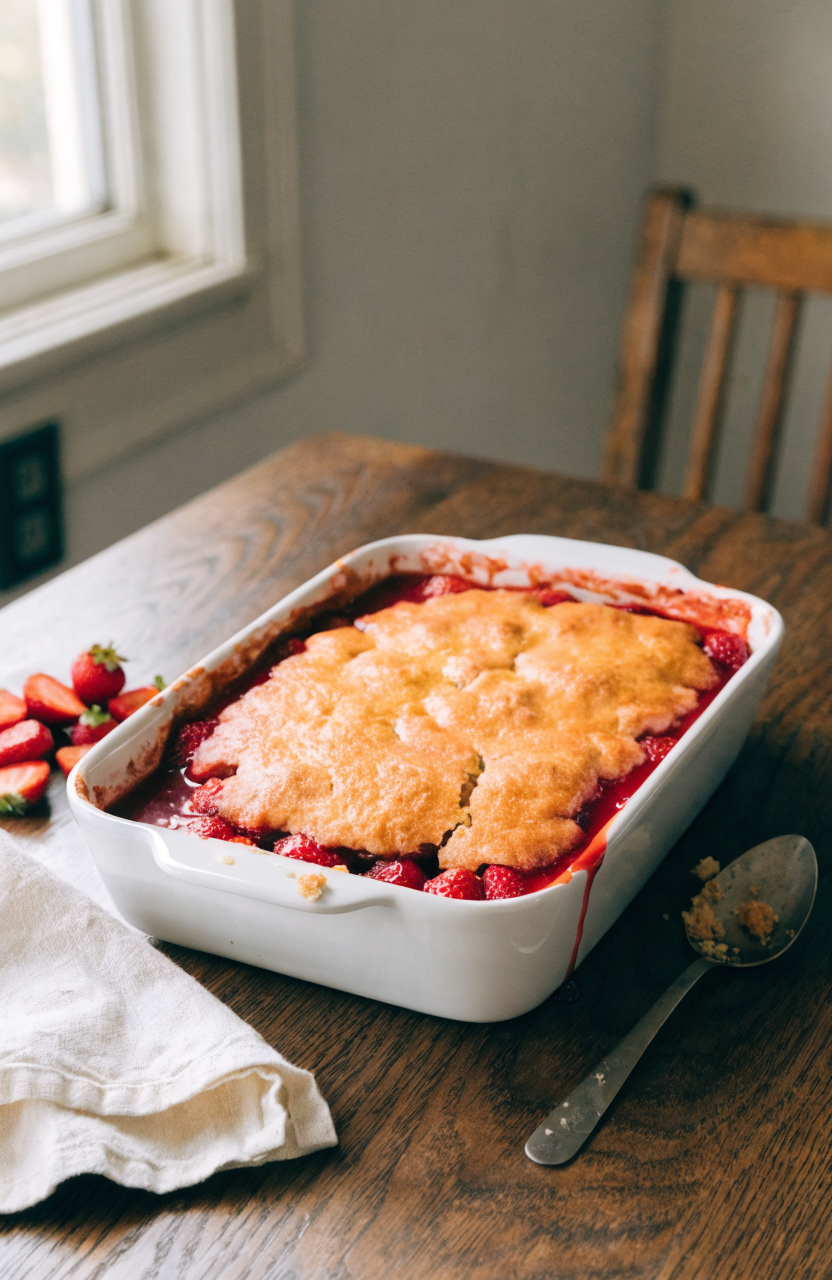
I remember the first time I tried a strawberry cobbler and ended up with a soupy bottom and gummy topping — not what I wanted for a summer dessert. This strawberry cobbler fixes that by focusing on two texture problems: watery fruit and a soggy topping. The focus on temperature and timing helps the topping bake through while the fruit stays saucy but not watery, and the result smells like warm berries and browned butter.
Why this strawberry cobbler works
The key technique is controlling how much moisture the strawberries release and when that moisture meets the biscuit topping. I macerate the berries briefly with sugar and a little lemon juice to draw out surface juices, then toss them with a small amount of cornstarch to stabilize the sauce. For the topping I use a butter-rich biscuit dough with just enough liquid to create a tender interior, and I scatter the dough across the fruit rather than fully covering it. During testing I discovered that starting the cobbler in a hot oven (425°F) for the first 12 minutes promotes edge crisping and steam escape, then lowering to 375°F finishes the topping without overbrowning. That two-temperature approach gives crisp edges and a tender center — the textural profile I’m after.
Key takeaways
- Short maceration plus cornstarch keeps the fruit saucy but not watery.
- A two-temperature bake (high then moderate) crisps edges while finishing the topping.
- Scattered biscuit drops create contrasts between crisp, tender, and saucy bites.
Ingredients you’ll need and what to substitute
For reliable texture I use fresh strawberries, granulated sugar for controlled sweetness, and cornstarch as a thickener. You can use frozen strawberries if fresh are unavailable, but thaw and drain most of the excess liquid before tossing with sugar and cornstarch; expect a slightly longer bake. I prefer whole-milk buttermilk for the biscuit dough because the acid helps tenderize the gluten; you can substitute 1 cup milk plus 1 tablespoon white vinegar, rested 5 minutes, if you don’t have buttermilk. Use cold unsalted butter for the biscuit dough so it creates steam pockets and a flaky crumb; if you must use salted butter, reduce added salt by 1/4 teaspoon. For a budget swap, use store-brand all-purpose flour and stick butter — the texture will remain very good.
Equipment
You only need a few common items: a 9×13-inch baking dish (this recipe fills it nicely and bakes evenly), a medium bowl for macerating the berries, a box grater or coarse grater for cold butter (or a pastry cutter), and a kitchen scale or measuring cups. If you have a 10-inch cast-iron skillet you can bake the cobbler directly in it for a nice rim and slightly crisper edges — reduce initial high-heat time by 2 minutes if using cast iron.
How to make strawberry cobbler
Prepare the strawberries
Start by hullling and halving fresh strawberries so pieces are roughly even; some larger halves are fine. Toss them with sugar, lemon juice, and cornstarch in a medium bowl and let them sit 10–15 minutes at room temperature. You’ll see juices begin to form — that’s intentional. The cornstarch will absorb some of that liquid so the sauce thickens during the bake without becoming syrupy. If you use frozen berries, thaw in a colander over a bowl and discard most of the free liquid before proceeding.
Make the biscuit topping
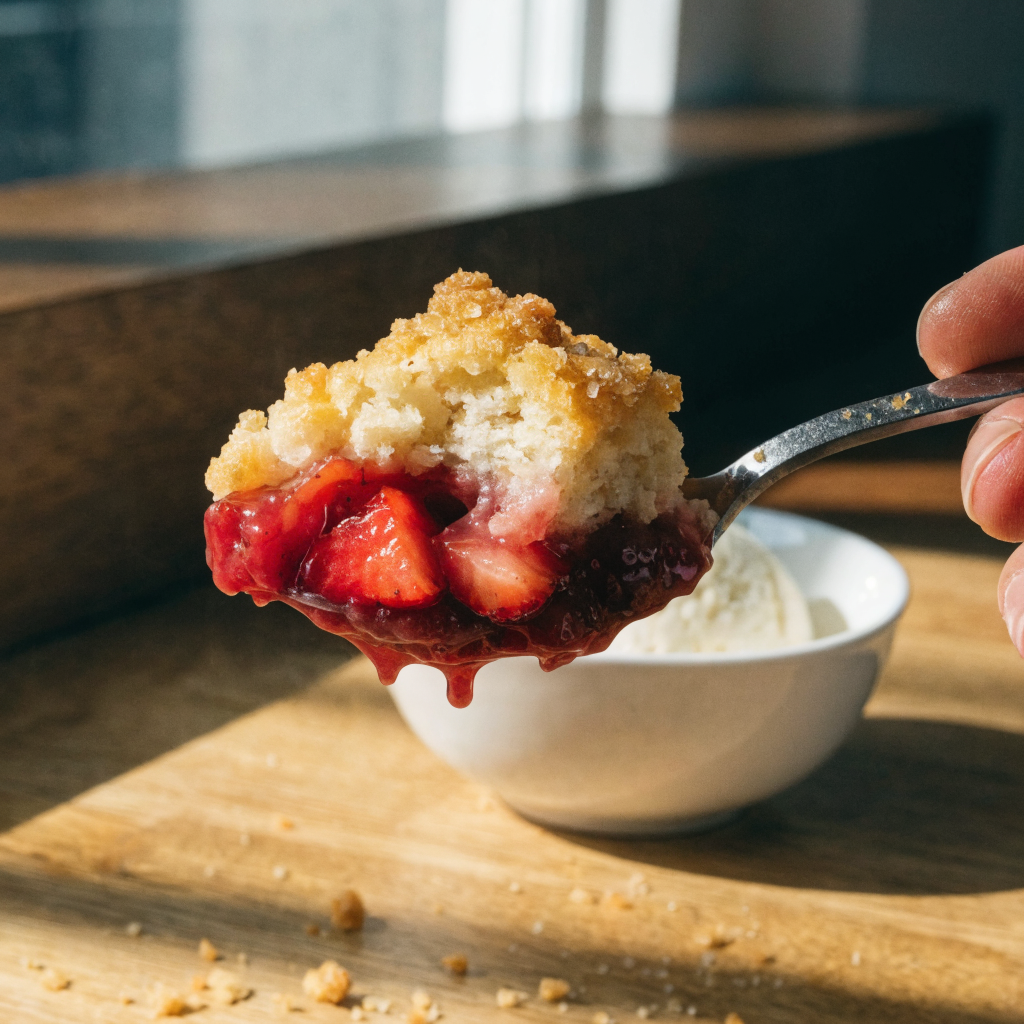
While the berries rest, mix the dry ingredients (flour, baking powder, baking soda, salt, and a little sugar) in a bowl. Grate cold butter into the flour or cut it in with a pastry cutter until the mixture resembles coarse crumbs with pea-size pieces. Stir in cold buttermilk until the dough just comes together — it should be slightly sticky but not wet. For faster work, grate butter using the large holes of a box grater; it stays cold and distributes evenly.
Assemble and bake
Preheat the oven to 425°F. Pour the macerated strawberries (and any accumulated juices) into a lightly buttered 9×13-inch baking dish and spread them into an even layer. Drop spoonfuls of the biscuit dough over the berries — leave gaps so steam can escape; the topping will spread a little during baking. Brush the biscuits lightly with a little melted butter and sprinkle with coarse sugar if you like crunch. Bake at 425°F for 12 minutes to encourage edge crisping and steam escape, then reduce the oven to 375°F and bake an additional 18–22 minutes until the topping is golden and a toothpick into the thickest biscuit portion comes out with moist crumbs but not raw dough. Total bake time will be about 30–35 minutes. Let the cobbler rest at least 15 minutes so the sauce thickens and the toppings set; the resting is crucial for the right texture.
Things I learned the hard way
- Don’t over-macerate the fruit: I once left strawberries with sugar for an hour and ended up with a thin sauce; 10–15 minutes is enough.
- Cornstarch matters: flour-thickened fruit tasted starchy in small batches; cornstarch gives a clearer, glossy sauce.
- Cold butter in the topping is non-negotiable: softer butter made a dense, flat topping rather than tender biscuits.
- High then lower heat works: baking entirely at 375°F left the edges pale and the topping gummy in early trials.
- Rest before serving: cutting into the cobbler immediately makes the sauce runny; 15 minutes lets the cornstarch set the sauce.
- I overfilled the pan once — use the pan size called for or expect overflow and longer bake time.
Variations to try
Strawberry-Rhubarb: Replace 2 cups of strawberries with 2 cups chopped rhubarb and increase sugar by 1 tablespoon; rhubarb adds a pleasant tartness and may need an extra 5 minutes baking time.
Lemon-Shortbread Topping: Replace 2 tablespoons of the biscuit sugar with finely ground shortbread crumbs and add 1 teaspoon lemon zest to the dough; bake the same way but watch browning closely.
Oat Streusel Finish: Swap half the biscuit topping for a buttery oat streusel (rolled oats, brown sugar, melted butter) and sprinkle it over the berries in the last 15 minutes of baking to preserve oat crunch.
Storage, freezing, and reheating
Store any leftover cobbler covered in the refrigerator for up to 3 days. Keep it in an airtight container or cover the baking dish tightly with foil. The topping will soften slightly after refrigeration; reheat single servings in a 350°F oven for 10–12 minutes to refresh the crust and warm the filling. For freezing, bake the cobbler fully, cool completely, wrap tightly in two layers of plastic wrap and foil, and freeze for up to 2 months; thaw overnight in the refrigerator and reheat in a 350°F oven for 25–30 minutes until warmed through. Note that the topping loses some crispness after freezing, but reheating restores some texture.
To maintain the best contrast of textures after reheating, warm individual portions gently and allow a brief rest so the sauce can thicken slightly; this prevents the topping from becoming overly soft and the filling from running when plated. If you’d like a crisper finish after refrigeration or freezing, reheat uncovered for the last few minutes under medium heat and monitor the topping so it doesn’t darken too quickly. These small steps help the cobbler keep the contrasts between crisp edges, tender biscuit, and a slightly saucy center even after storage and reheating.
What to serve with strawberry cobbler
I like to serve this with a scoop of vanilla ice cream, a spoonful of lightly sweetened whipped cream, or a drizzle of crème fraîche for brightness. For a brunch twist, pair it with plain Greek yogurt and granola. A hot cup of black coffee or a milky tea balances the fruit sweetness.
Texture-Focused Strawberry Cobbler with Biscuit Topping
Ingredients
Equipment
Method
- In a medium bowl toss the hulled and halved strawberries with 1/2 cup sugar, 1 tablespoon lemon juice, 1 tablespoon cornstarch, and 1/4 teaspoon salt; let sit 10–15 minutes at room temperature until juices form.
- Preheat oven to 425°F. In a separate bowl whisk together 2 cups flour, 2 tablespoons sugar, 1 tablespoon baking powder, 1/2 teaspoon baking soda, and 1/2 teaspoon salt. Grate or cut 1/2 cup cold butter into the flour and toss until the mixture resembles coarse crumbs with pea-size pieces. Stir in 1 cup cold buttermilk until dough just comes together; it should be slightly sticky.
- Lightly butter a 9×13-inch baking dish and pour the macerated strawberries and any juices into it, spreading into an even layer. Drop the biscuit dough by spoonfuls over the berries, leaving small gaps for steam to escape. Brush the dough lightly with 2 tablespoons melted butter and sprinkle with 2 tablespoons coarse sugar if using. Bake at 425°F for 12 minutes, then reduce oven temperature to 375°F and continue baking 18–22 minutes until the topping is golden and a toothpick inserted into the biscuit comes out with moist crumbs but no raw dough. Remove and let rest 15 minutes before serving.
- Spoon warm cobbler into bowls and serve with vanilla ice cream or whipped cream if desired.
Notes
Frequently asked questions
Can I use frozen strawberries? Yes. Thaw them in a colander so excess liquid drains, then discard most of that liquid before tossing with sugar and cornstarch; bake an extra 3–6 minutes if needed.
Why is my topping dough dense? Likely the butter was too warm or you overworked the dough; keep butter cold and mix just until combined for tender biscuits.
How do I prevent a soggy bottom? Short maceration, cornstarch in the fruit, scattering the topping to allow steam escape, and the initial high-heat stage all reduce sogginess.
Can I make this ahead? Yes — you can assemble the cobbler and refrigerate (covered) for up to 8 hours before baking. Let it sit at room temperature 15 minutes before baking and add 3–5 minutes to the initial high-heat stage if the filling is cold.
How do I know when it’s done? The topping should be golden brown, and a toothpick into the thickest biscuit should come out with moist crumbs but no raw dough; the filling should bubble slightly at the edges. After resting, the sauce should be thick but pourable.
Closing
This strawberry cobbler balances crisp, tender, and saucy textures through simple technique and careful timing; the two-temperature bake and brief maceration make the difference. For best results, plan your timing so the fruit macerates while you prepare the topping, and allow the full 15-minute rest before serving to let the filling set. Enjoy the contrast of warm berries and tender biscuit — it’s a reliable way to showcase peak-season fruit.

Leave a Reply