I started this recipe because I wanted a roast that kept the chewy bite of caramelized onions against the melt-tender beef — not the watery, falling-apart stew that can happen when you skip a proper sear and reduction. This French onion chuck roast delivers concentrated onion flavor in a silky sauce, and the phrase “French onion chuck roast” is exactly how I searched when I first tried to recreate that restaurant-style onion glaze at home.
I tested this method twice, and what changed between attempts is the sear and the onion caramel finish; that made the biggest difference in texture and sauce clarity, so I’ll point out the cues that mattered most.
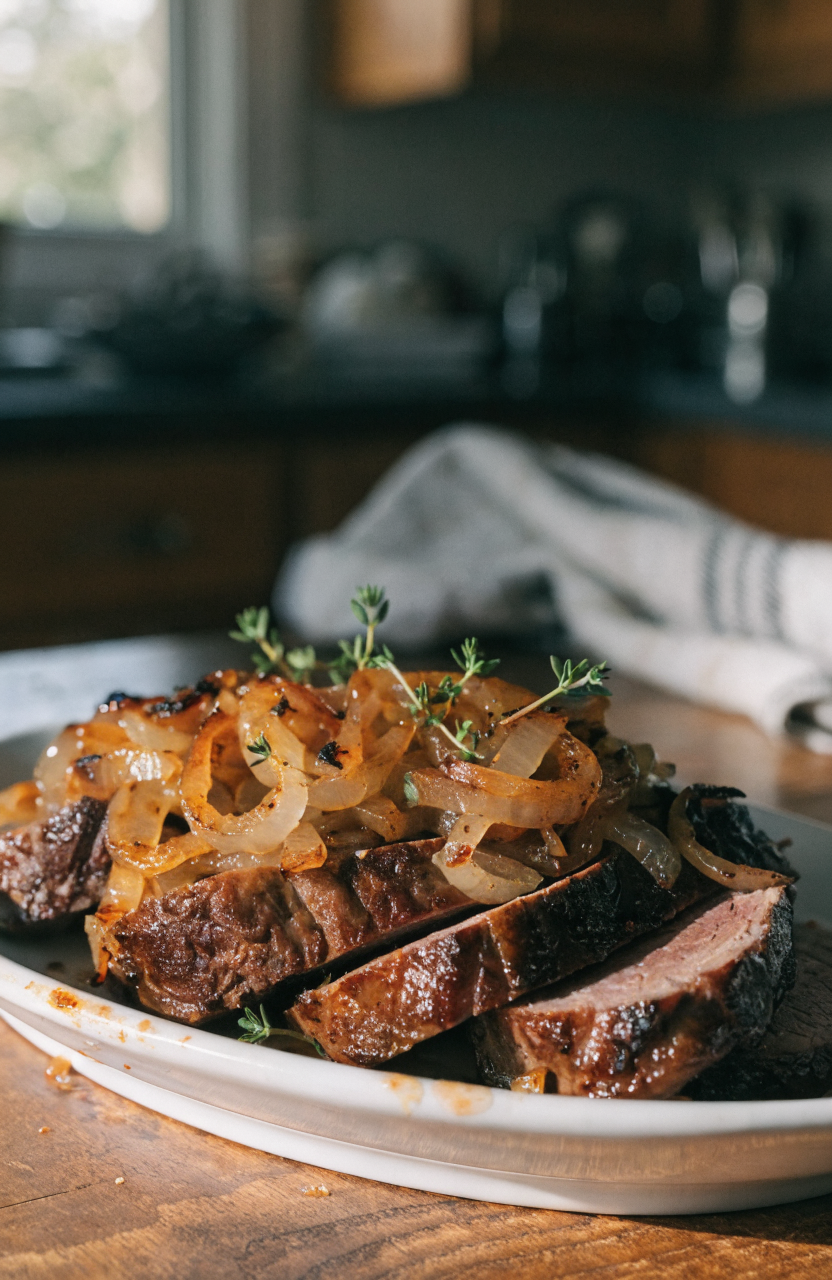
Why this French onion chuck roast works
The key technique is twofold: develop deep flavor by long, patient caramelization of onions and lock juices into the chuck roast with a high-heat sear before a low-and-slow braise. Chuck roast has enough marbling to become tender without drying if you maintain a gentle simmer after searing. During testing I found that skipping the high-temperature sear caused the roast to shed juices and the sauce to become thin; adding a short reduction at the end concentrates the onion sauce without overcooking the beef. The recipe uses a 3–3.5 pound boneless chuck, which hits the sweet spot for even braising in a 5–6 quart Dutch oven.
Key takeaways
- Sear the roast well to keep juices inside and build a fond for the sauce.
- Caramelize the onions slowly for real French onion depth — patience matters.
- Finish with a brief oven braise and final reduction on the stovetop for glossy, sliceable results.
Ingredients you’ll need and what to substitute
This recipe leans on three flavor pillars: caramelized yellow onions, a beefy braising liquid, and a browned crust on the roast. Use yellow onions for their balance of sweetness and savory flavor; white onions will work but are less sweet, and sweet onions (Vidalia) will produce a milder result. If you prefer a bolder savory edge, add 1 tablespoon tomato paste to the onions while they caramelize — it deepens color and umami without changing texture. Beef broth provides the braising liquid; if you only have low-sodium broth, taste and add 1/2 teaspoon salt to the pan before braising. I tested with both store-brand broth and boxed low-sodium; both worked fine when I adjusted seasoning at the end.
Equipment
You need a 5–6 quart Dutch oven with a fitted lid for even heat and enough room to tuck the roast among onions. If you don’t have a Dutch oven, use a large ovenproof heavy-bottomed pot or a roasting pan plus an oven-safe lid or foil. A good instant-read thermometer is essential to check internal temperature for doneness. A large wooden spoon for stirring onions and a rimmed baking sheet to rest the roast are handy.
How to make French onion chuck roast
Prepare the onions and roast
Start by peeling and thinly slicing 3 pounds of yellow onions. Heat 2 tablespoons neutral oil and 2 tablespoons unsalted butter in the Dutch oven over medium-low heat; add the onions in an even layer with 1 teaspoon kosher salt and stir every 5–7 minutes. Plan 40–50 minutes to reach deep golden-brown caramelization — the onions should soften, stick slightly to the pan, then release and become richly browned. Lower heat if they bake rather than brown; you want steady color change, not burning. While the onions cook, pat a 3–3.5 pound boneless chuck roast dry and season it generously with 1 1/2 teaspoons kosher salt and 1 teaspoon black pepper.
Sear and deglaze
When the onions are about 10 minutes from being finished, heat 2 tablespoons oil in a large skillet over medium-high (or clear the Dutch oven and raise heat under it). Sear the roast 3–4 minutes per side until a deep brown crust forms. Transfer the roast to a plate and add 1 tablespoon butter to the pan with the fond; cook 30 seconds, then add 1 1/2 cups beef broth to deglaze, scraping browned bits into the liquid. Pour the deglazing liquid over the caramelized onions and nestle the roast into the onion bed, fat side up. Add 2 sprigs fresh thyme and 1 bay leaf to the pot.
Braise in the oven
Bring the liquid to a gentle simmer on the stovetop, cover the Dutch oven, and transfer to a 300°F oven. Braise 2 to 2 1/2 hours until the roast reaches 200–205°F internal if you want fork-tender shredding, or 185–195°F if you prefer sliceable, tender meat. My tested target for a sliceable roast with tender bite was 190°F; it took about 2 hours 15 minutes in my home oven. Remove pot from oven and transfer the roast to a cutting board; tent loosely with foil and rest 15 minutes.
Finish the onion sauce
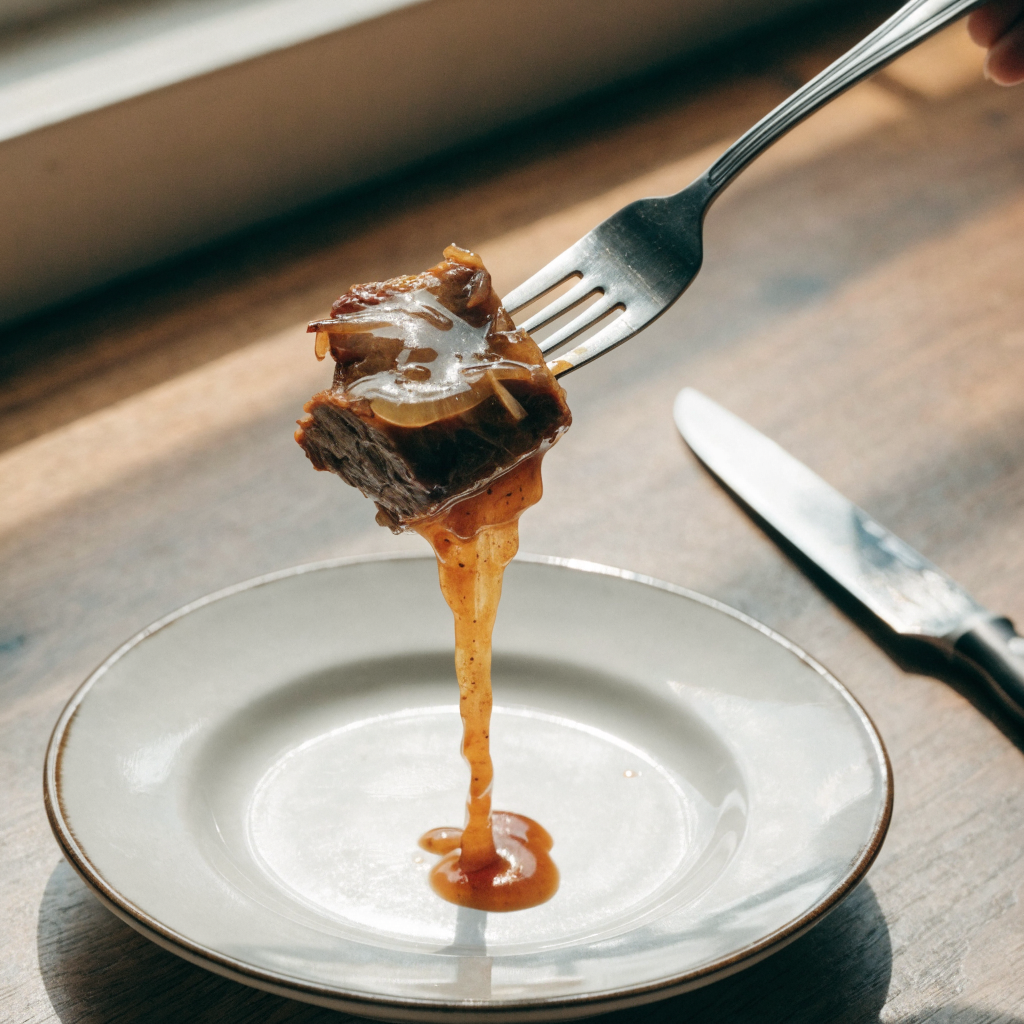
While the roast rests, skim any fat from the braising liquid, then place the Dutch oven on medium-high heat and reduce the sauce 8–12 minutes until slightly thickened and glossy. Taste and season with 1/2 to 1 teaspoon salt as needed. Slice the roast against the grain into 1/4–1/2 inch slices for best texture, arrange on a platter, and spoon the caramelized-onion sauce over the top.
Things I learned the hard way
- Don’t rush onion caramelization — high heat burns the edges but leaves raw centers. Low and steady is the path to even texture.
- Skipping the sear made the roast release juices and left the sauce thin; the fond adds crucial flavor and helps sauce body.
- Overbaking to 210°F produced shreddable meat but lost a pleasant sliceable texture I wanted; decide whether you want slices or forks.
- If the sauce tastes flat, a small pinch of baking soda during caramelization can speed browning but changes flavor — I recommend patience instead.
- For a clearer sauce, chill the pot briefly and skim hardened fat; for speed, spoon off the fat hot but be careful not to lose flavor with it.
- My first attempt used too much liquid — only about 1 1/2 cups is necessary to braise a 3-pound roast in a Dutch oven without diluting onion flavor.
Variations to try
- Herbed mustard crust: Rub 2 tablespoons Dijon mustard on the roast before searing for a tangy crust; no time change required.
- Mushroom boost: Add 8 ounces sliced cremini mushrooms in with the onions during the last 10 minutes of caramelization; increase braising liquid by 1/4 cup to account for mushroom moisture.
- Balsamic brightness: Stir in 2 teaspoons balsamic vinegar during the final reduction for acidity and depth; this doesn’t change cooking time but brightens the sauce.
- Slow-cooker adaptation: After searing and deglazing, transfer onions, liquid, and roast to a 6-quart slow cooker and cook on low 8 hours for shreddable meat; the final reduction should be done separately on the stovetop.
Storage, freezing, and reheating
Refrigerate cooled roast and sauce in separate airtight containers for up to 4 days. For freezing, slice roast and pack with sauce in freezer-safe containers; freeze up to 3 months. Thaw overnight in the refrigerator. To reheat, warm sauce in a saucepan until simmering, add sliced roast and heat gently 6–8 minutes until warmed through; avoid prolonged simmering which will dry the slices. For oven reheating, place slices in a baking dish with sauce, cover with foil and warm at 300°F for 15–20 minutes until heated through.
What to serve with French onion chuck roast
Serve slices with buttery mashed potatoes or an herbed polenta to soak up the onion sauce, and a crisp green salad with a bright vinaigrette to cut the richness. Roasted root vegetables or sautéed green beans with lemon also pair well.
French Onion Chuck Roast
Ingredients
Equipment
Method
- Heat 1 tablespoon vegetable oil and 2 tablespoons butter in a 5–6 quart Dutch oven over medium-low heat; add sliced onions and 1 teaspoon kosher salt and cook, stirring every 5–7 minutes, until deep golden brown and softened, 40–50 minutes.
- While onions cook, pat the chuck roast dry and season all over with 1/2 teaspoon kosher salt and 1/2 teaspoon black pepper (reserve remaining seasoning for later).
- When onions are about 10 minutes from done, heat remaining 1 tablespoon oil in a large skillet over medium-high heat and sear the roast 3–4 minutes per side until a deep brown crust forms; transfer roast to a plate.
- Add 1 tablespoon butter to the skillet, cook 30 seconds, then pour in 1 1/2 cups beef broth and scrape up browned bits; stir in 1 tablespoon Worcestershire sauce and pour this deglaze over the caramelized onions.
- Nestle the seared roast into the onion bed, add thyme and bay leaf, and sprinkle the roast with the remaining 1 teaspoon kosher salt and 1/2 teaspoon black pepper.
- Bring liquid to a gentle simmer on the stovetop, cover the Dutch oven, and transfer to a 300°F oven; braise until internal temperature reaches 190°F for sliceable tender beef or 200–205°F for shreddable meat, about 2 to 2 1/2 hours for a 3–3.5 pound roast.
- Remove roast to a cutting board and tent with foil; rest 15 minutes.
- Skim excess fat from the braising liquid, then place the Dutch oven over medium-high heat and reduce the sauce 8–12 minutes until slightly thick and glossy; taste and season with additional salt if needed and stir in 1 teaspoon balsamic vinegar if using.
- Slice the roast against the grain into 1/4–1/2 inch slices, arrange on a platter, and spoon the caramelized onion sauce over the meat before serving.
Notes
Frequently asked questions
How long should I braise a 3-pound chuck roast? Plan on 2 to 2 1/2 hours at 300°F in a Dutch oven; check internal temperature — 190°F gives sliceable tender meat, 200–205°F gives shreddable meat.
Can I use a rump roast or brisket instead? Yes, both work but adjust cooking times: brisket may need longer to break down connective tissue, and rump can dry if overcooked; watch internal temperature and texture.
Why did my sauce become watery? Most often because too much braising liquid was used or the onions weren’t concentrated; reduce the sauce on the stovetop until slightly thickened to fix it.
Can I make this ahead? Yes — cook fully, cool, and refrigerate up to 24 hours; reheat gently in the sauce. Flavor often deepens overnight.
Is searing required? Technically you can braise without searing, but searing creates fond that enriches the sauce and helps keep the meat juices locked in; I recommend it for best texture.
Can I use pre-sliced onions to save time? You can, but pre-sliced onions often release water and take longer to caramelize; you may need extra time and frequent stirring to reach the same deep color.
Closing
This French onion chuck roast balances a thick, glossy onion sauce with tender, sliceable beef by pairing a deep sear with a controlled oven braise and a final reduction; it’s a texture-first roast that holds up well on a fork and on the plate. I like serving it with mashed potatoes and quick-blanched green beans for contrast.

Leave a Reply